The Waimate Warrior
A soldier looks out over Waimate from the painted silos.
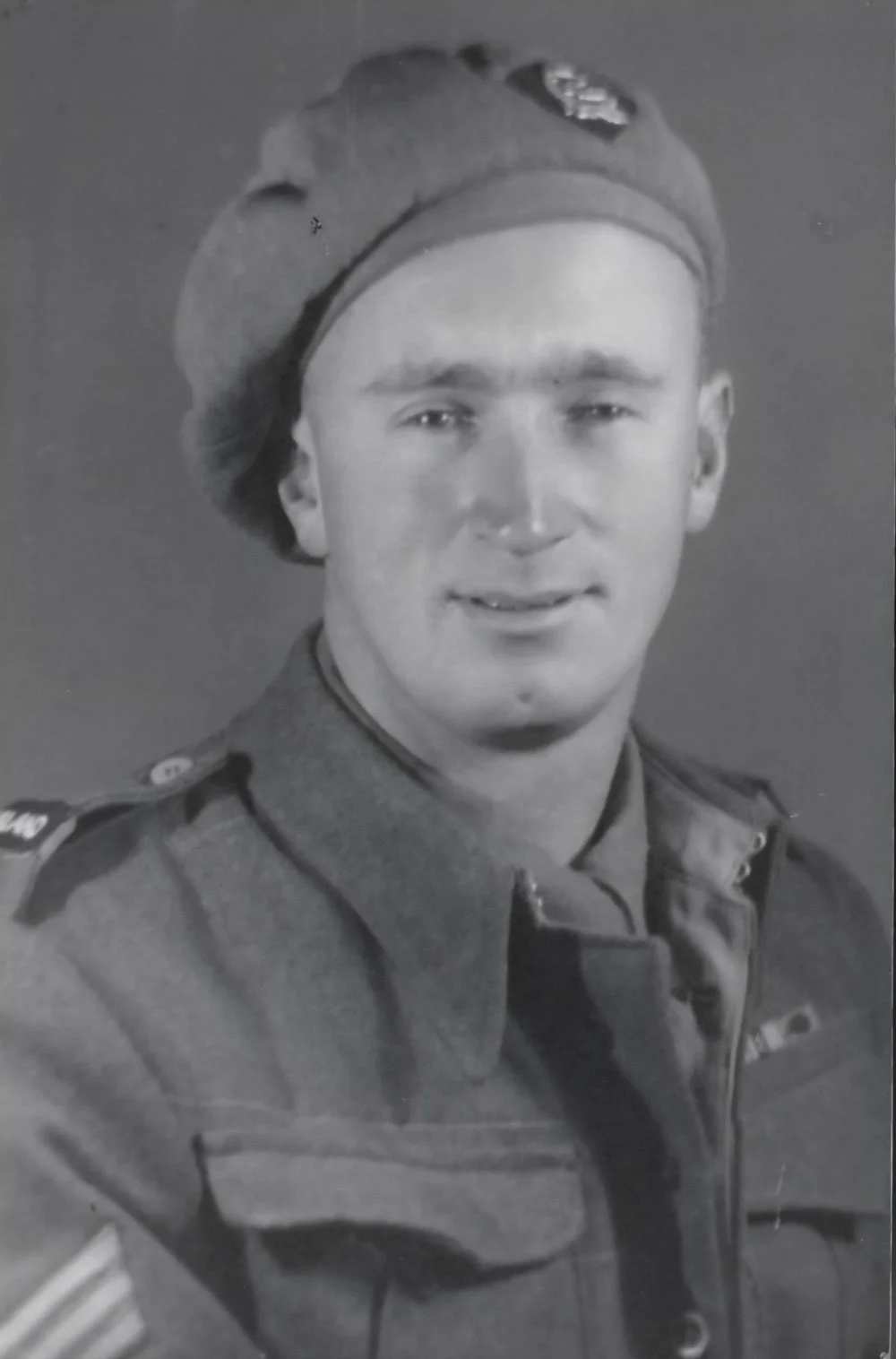
That soldier is Eric Batchelor.
He’s one of the country’s most highly decorated war heroes - described at his funeral as an “ordinary extraordinary person”.
Silo artist Bill Scott has captured the “glint” in his eye, the humour and humble nature he was known locally for.
As we head into Anzac Day we look at the story behind the soldier on the silos - also known as The Ferret and the Waimate Warrior.
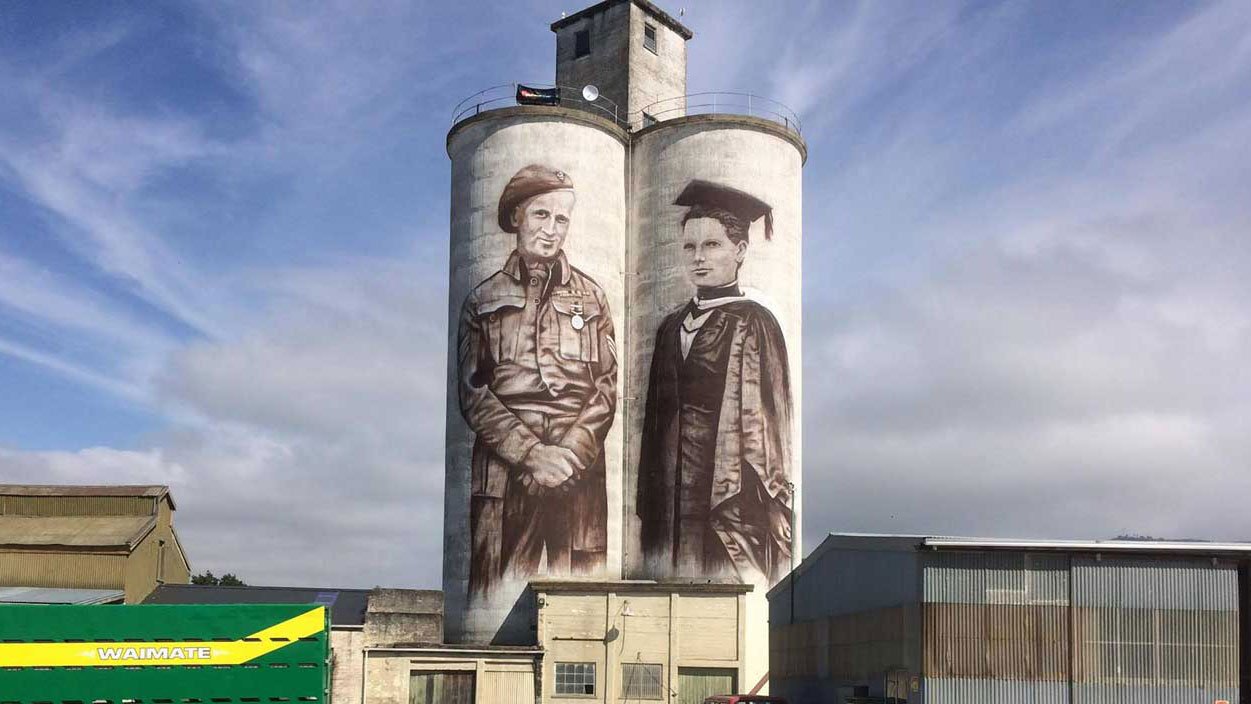
Eric Batchelor depicted on the Waimate silos alongside Dr Margaret Cruickshank. Two brave and remarkable locals.
Born and raised here
Eric Batchelor was born in Waimate on 29 August 1920 and went to Main School.
He was the son of a Waimate labourer and farm worker, and left school early to go out to work. By the time he enlisted, he was working on a dairy farm near Dunedin.
As a young man, he spent much of his spare time hunting in the hills around Waimate and later around Dunedin, developing the skills he became known for.
He joined the Territorial Army at 16 while in Dunedin and at 19 years of age he enlisted for war service.
Eric Batchelor was only 20 years old when he headed off to war in 1941.
The first DCM
The young soldier from Waimate made a name for himself overseas.
He was the only New Zealander to be awarded the Distinguished Conduct Medal (DCM) and Bar during the Second World War.
The DCM recognised bravery in combat. A “Bar” meant he had earned it a second time.
His first Distinguished Conduct Medal followed action at San Donato in Italy on 21 July 1944.
During the advance, Batchelor took a small group forward and cleared a number of enemy-held houses, allowing the rest of the company to continue.
Nine prisoners were taken, several of them by Batchelor himself.
The second DCM
His second award followed a similar action later in the Italian campaign.
He and a small group came across a house behind enemy lines and attacked, capturing 19 German soldiers, including a commanding officer, along with maps and documents of value to the Allies.
In an account reported by the Otago Daily Times, Batchelor said he knew there were Germans inside when he could smell sauerkraut.
“There were about 30 Germans inside and there was a bit of a fight.”
It was this ability to “lead quickly and quietly through the black of night” that earned him the nickname “The Ferret”.
Other exploits
Batchelor saw some of the worst of the war early on.
He fought at El Alamein. At one point he was lying near the start line, face down in the desert as hundreds of Allied guns opened fire. When the return barrage came in, the men on either side of him were killed. He was wounded there, and again later in Libya.
Years later, he said that after El Alamein he knew he could survive anything.
“Nothing could be worse than that.”
Another story he’s known for shows a more human face to battle. After a mission to remove a German machine-gun position, he returned with a young German soldier as a prisoner who was close to tears. Batchelor was leading him back by the hand.
Just doing his job
According to a Timaru Herald interview, he said the awards didn’t mean much to him:
“I just grunted. I was just doing my job.”
At around 23 he was leading a platoon of soldiers, mainly from the West Coast, after his awards there was pressure on him to take a higher rank. He wasn’t interested as he felt he was too outspoken to be an officer, and he wanted to stay with his West Coast mates.
Back home to Waimate
It was Waimate where he chose to live when he returned from the war.
In a 1978 interview with the Timaru Herald, he said:
“I like Waimate. Under the post-war rehabilitation scheme I trained as a market gardener, and was given the opportunity to take up a property in Hawke’s Bay, but it was too far away from the place that I really wanted to live.”
He married Thurza and they raised two children here, Craig and Gisella.
Over the years, he ran a taxi business, a delicatessen, and later a wine shop.
When he died in 2010, his funeral drew a large turnout. A procession moved through Waimate before he was laid to rest with military honours.
He’s remembered as a great family man, a great member of the community, and more widely as one of the country’s bravest young soldiers.