Vet Ryan Luckman takes on farming’s big problems
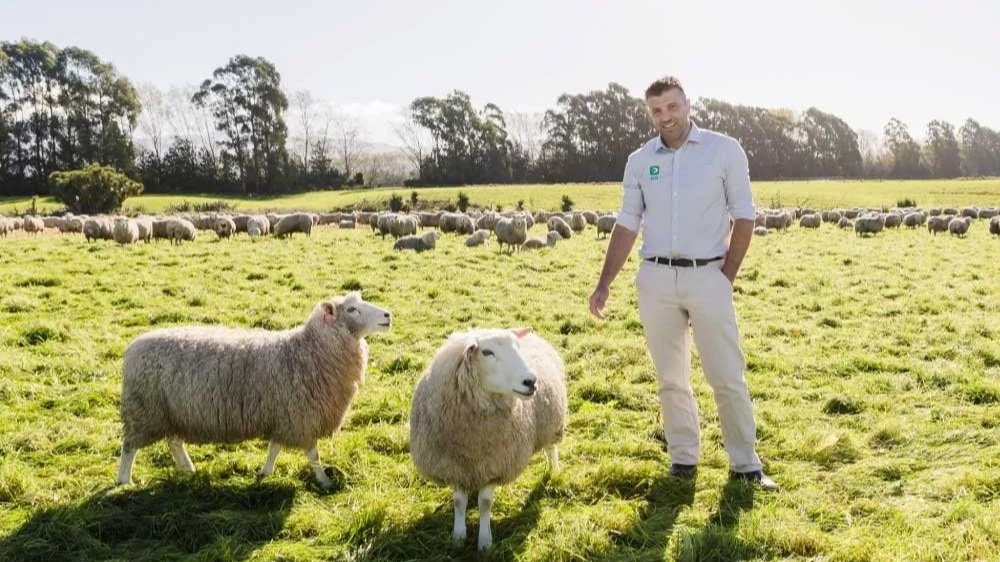
A free bed, some “sheep stuff” and a scholarship brought Ryan Luckman to Waimate as a veterinary student.
Nearly two decades later, he has built a life here, thrown himself into helping the community and is now devoting his considerable energy to solving some complex problems for farmers.
We caught up with Ryan to find out how a young vet from the North Island ended up building agricultural technology from Waimate.
A student looking for sheep
Ryan grew up near Paengaroa, about 10 minutes out of Te Puke in the North Island, and was studying veterinary science when he needed somewhere to complete the practical component of his degree.
His aunty Karen was a police officer in Waimate at the time and offered him a bed.
“As a uni student, that was a pretty lucrative offer,” Ryan laughs.
He also wanted to do some “sheep stuff”, and a friend suggested either Fairlie or Waimate.
Ryan took up a scholarship at Waimate Vet Services (now The Veterinary Centre) – and he's been here ever since.
Asked why he stayed, he says there were quite a few reasons. Professionally, the mixed practice meant he got to do a bit of everything, and he also credits the "great community".
Ryan married fellow vet Claire, and the couple are raising their three children here.
He has also become heavily involved outside work, including Rotary, the Whitehorse Big Easy and the Waimate High School Opportunity Project, which helps create and fund opportunities for students, including the school's developing agricultural hub.
Ryan likes getting involved. He also likes solving problems.
A problem getting harder to ignore
After years in veterinary practice, Ryan was becoming increasingly interested in data and how it could be used to solve real-world agricultural problems.
About three years ago, he dropped a day a week at the clinic and established his own agricultural consultancy, AgVisory, initially thinking he would largely consult to agricultural technology companies.
But at the same time, he was trying to help sheep farmers deal with a massive emerging issue: drench resistance.
“For years we relied on drench to control worms. It worked well, got lambs growing fast, there was less pasture contamination - everything was hunky dory.”
But worms gradually developed resistance to the drenches designed to kill them.
What began with single drenches progressed to double and then triple combinations.
Now, Ryan says, about one in three New Zealand sheep farms has triple drench resistance.
The cost has been estimated at $10–$15 per lamb, and about $110 million a year across New Zealand's sheep industry.
And when drenches fail, Ryan says the consequences can be “spectacularly bad”.
Knowing what to do is one thing
Much of the science and knowledge needed to tackle the problem already existed.
Beef + Lamb New Zealand's Wormwise programme provides farmers with a framework for managing internal parasites and slowing drench resistance.
Its FARMED approach focuses on five principles: feeding stock well, avoiding worms, refugia, monitoring and effective drenching.
But two of those principles – avoidance and refugia – presented a particularly difficult practical problem.
“You know what you should be doing, but it's really hard to know where the invisible worms actually are.”
Ryan decided there must be a way to use technology to solve that.
Turning the invisible into something farmers can see
The first step was research.
Ryan began searching internationally for research and models that could help.
“There was heaps of research out there, some just sitting in drawers not being used, largely because there hadn't been the technology to make it practical.”
He began pulling the pieces together.
The result is DAGI – Drench And Grazing Integration, a whole-farm parasite management app designed for sheep farms.
How DAGI works
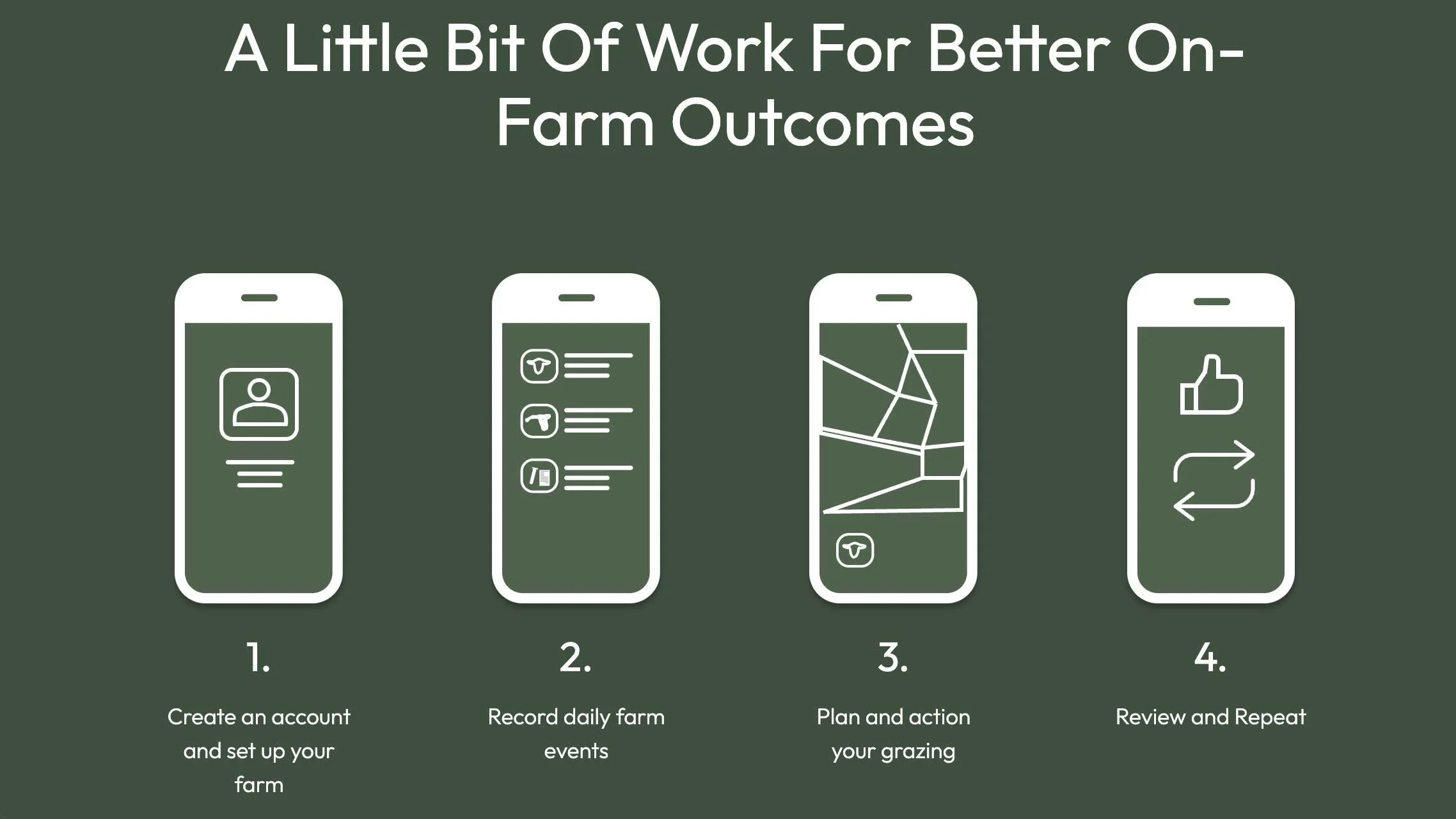
Farmers download the app and start entering information including paddock size, stock movements, drench history and faecal egg count results.
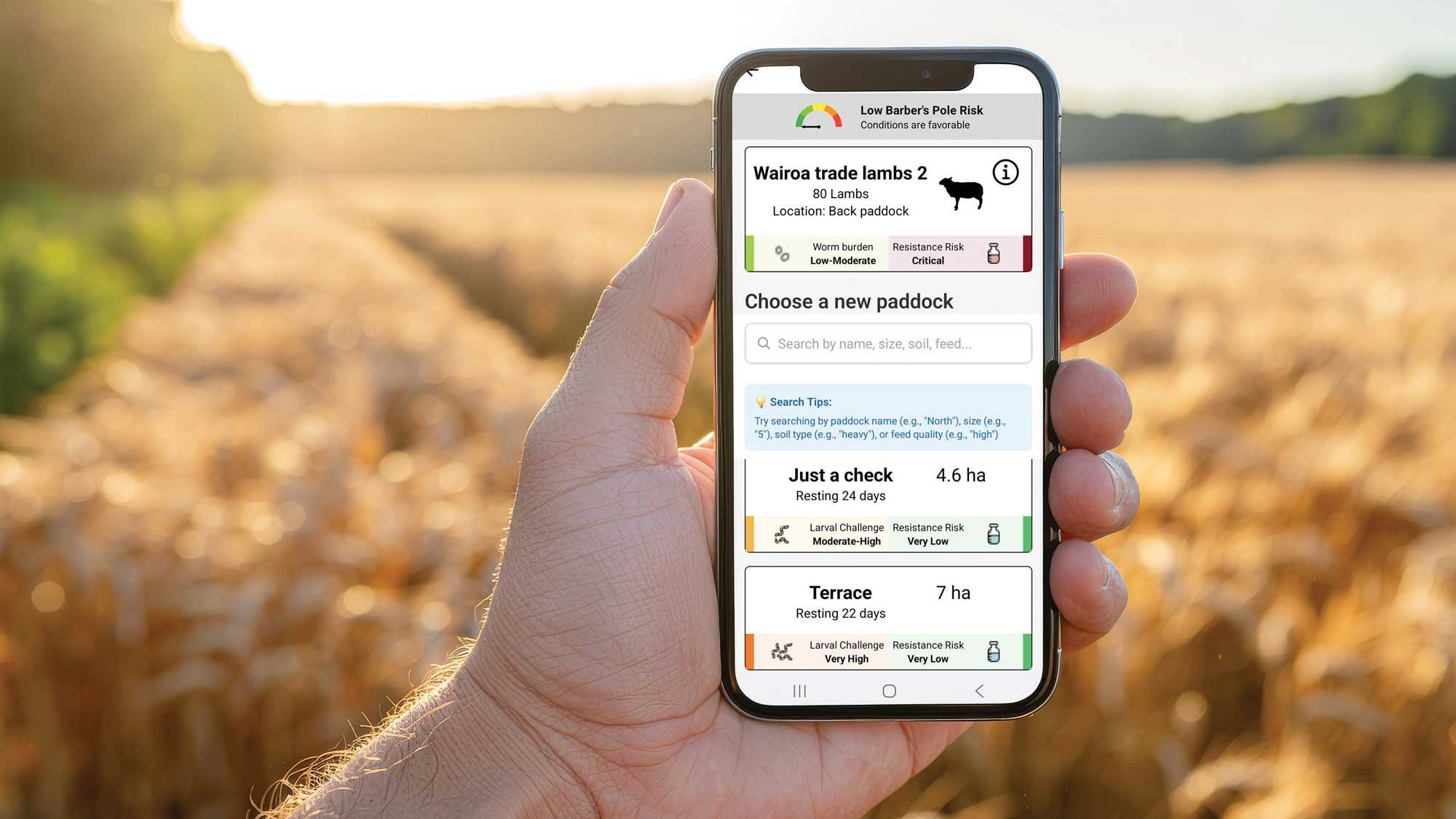
Models running in the background use that information to build a picture of parasite risk across the farm.
The complicated science is then translated into a traffic-light style map.
Paddocks begin yellow while DAGI learns about the farm. As information builds, they move towards green or red depending on predicted parasite contamination and resistance risk.
Once farmers can see where the risk is, they have more options for managing it – and that doesn't necessarily mean reaching for a drench.
Cattle, for example, can be used strategically to graze areas carrying sheep parasite larvae. While some parasite species can infect both, cattle and sheep largely carry different internal parasites, meaning cattle can help “clean up” pasture for lambs.
Well-fed adult ewes can also be useful because their stronger immunity makes them better able to cope with parasite challenge than susceptible young stock.
Crops and new pasture can provide low-parasite grazing too.
Ryan describes DAGI as like having “an adviser in your pocket” – continuously bringing together information that would otherwise be extremely difficult to track.
The aim is to get ahead of the problem, rather than relying on drench once parasites are already affecting stock.
Three years from idea to app
Taking DAGI from an idea to a working product took about three years.
Finding the right software developer was part of the challenge. Ryan tried three before finding one able to deal with the complexity of what he was trying to build.
Beta users have been putting DAGI through its paces on farms for about nine months.
“The feedback has been really good. It’s changing how they do their grazing management.”
The app was also well received at Fieldays, and Ryan is now taking it to farmers through roadshows and other industry events.
DAGI is available on Google Play, with access also available for Apple users while its App Store account is being processed. Farmers can try it free for seven days, and Ryan and his team provide support to help users get their farms set up.
While the modelling behind it is complex, making the app intuitive and easy to use has been a priority.
Lessons from building something new
Ryan has learned plenty about business along the way.
“You get told everything will be three times as expensive, take three times as long and be a third as profitable – and that's probably right.”
He also made sure he had his ducks in a row before seeking feedback.
“Before taking the idea to people likely to tell me the reasons it couldn't work, I wanted to be confident that it could.”
For anyone else contemplating turning an idea into a business, his advice is to make use of the mentoring and business development programmes available – and make sure the idea solves a genuine problem.
Waimate, he says, has been a particularly good place to develop the app.
“We’re really fortunate in this area to have really progressive farmers who want to do well and be right on the edge of technology.
“They're not so bound by ‘this is the way it’s always been done on this farm for 100 years’.”
Not exactly slowing down
DAGI is only one of the projects Ryan's working on.
He and fellow vet Euan Tait have also launched AirWeigh in New Zealand after discovering Gander's technology at a conference in Argentina.
The system uses drones and artificial intelligence to estimate cattle weights from above.
Ryan has always wanted to do more with weighing, which he believes is really “under done”.
He is also looking at the emerging problem of drench resistance in cattle and collaborating with Lincoln University on work exploring PCR tools to measure parasite larval contamination on pasture.
He still does consultancy work, and vet Grace Boardmanworks part-time with him on DAGI.
For someone who originally arrived in Waimate with little more than a free bed, a scholarship and a desire to learn about sheep, Ryan has become well and truly embedded in the district.
And after nearly two decades solving problems one farm and one animal at a time, he's now using his energy to solve some much bigger ones.