Whitehorse trails get new signage as use continues to grow
Regular users of the Whitehorse trails will notice something new this summer - map board signs have been installed across the trail network, marking a practical step in its evolution - from a local riders’ playground to a professional district asset.
The new signs were developed in response to the growing use of the trail network - as more people head up the hill, the new signage is designed to make it easier to navigate, select the right trail and stay safe.
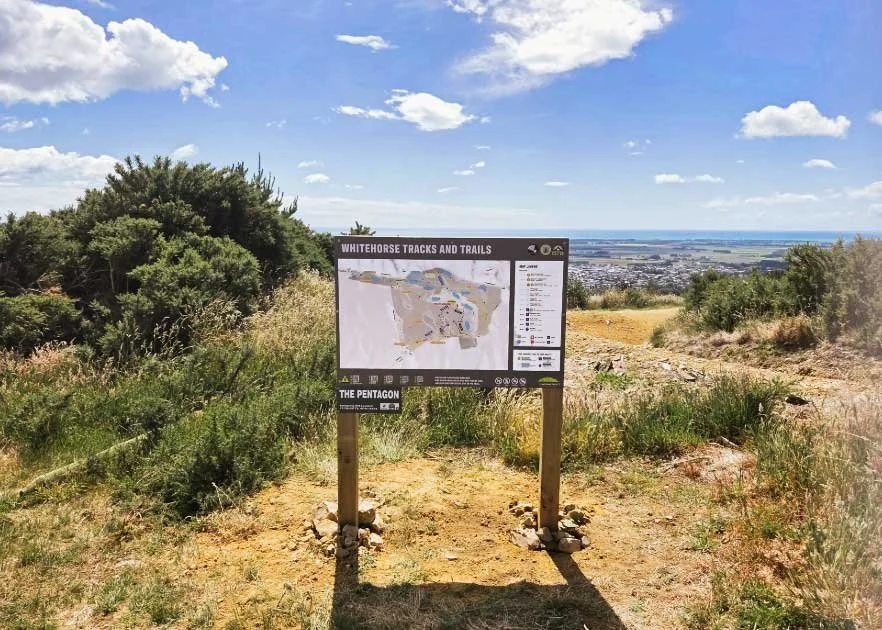
One of the new boards lat the top of the trail network, looking over Waimate and out to sea.
Signage that matches the quality of the trails
Installed at key entry points and junctions, the large-format map boards (1.2 by 0.8 metres) are designed to be easily read while stopping to plan a ride or walk. They show the full trail network, clearly marking trail names, grades and connections.
The project was a joint effort between Waimate2gether, Waimate Trackways, Point Bush Ecosanctuary and Whitehorse MTB Riders - the local mountain bike club.
Club secretary and treasurer Paul Buckley says the response has been positive.
“The new signage looks fantastic, and we get frequent comments on how well signposted and easy to navigate our trail network is.”
The map boards follow last year’s installation of professional trail markers on individual tracks, bringing the Whitehorse trail network in line with what users expect from a well-established mountain biking destination.
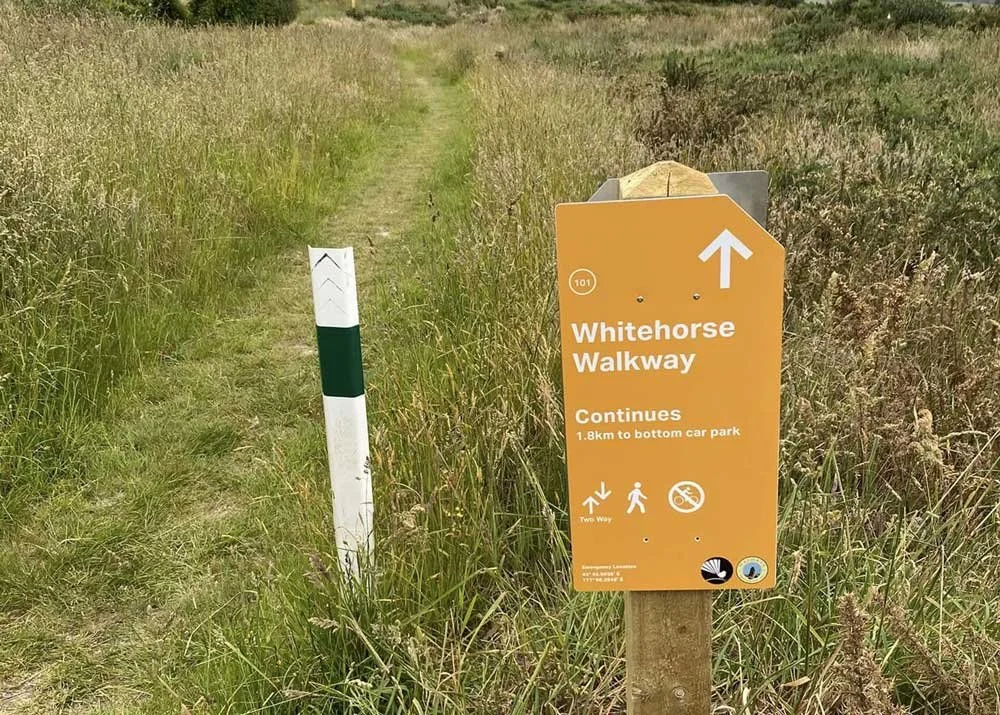
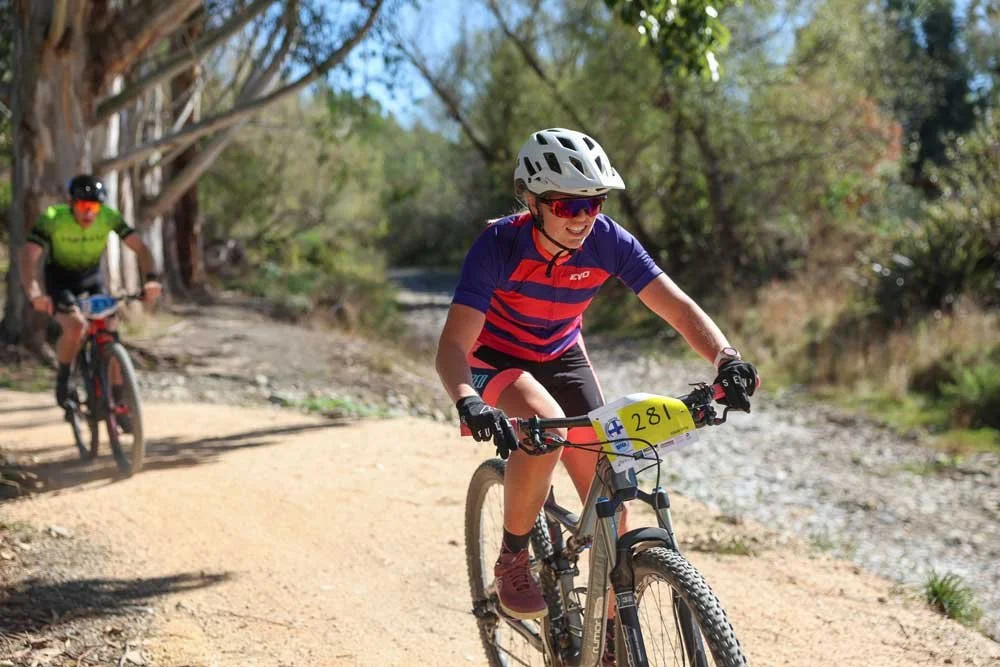
Left. Directional signage was installed in 2025. Right. Competitors on the river section in the Whitehorse Big Easy event.
Weaving through an eco sanctuary
The club was incorporated in 2014, following a push by local riders Dave Hanson and Ken Buckingham to build a multi-use trail to the Whitehorse monument. That vision became the Whitehorse Big Easy, now the backbone of the network.
A defining feature of the trails is that they run through the Point Bush eco sanctuary, made possible through the generosity and long-standing partnership with landowners Ann and Gary Dennison.
Today, the Whitehorse network includes around 18 kilometres of named trails, spanning the hills above Waimate and river trails at the base, with options ranging from entry-level to advanced.
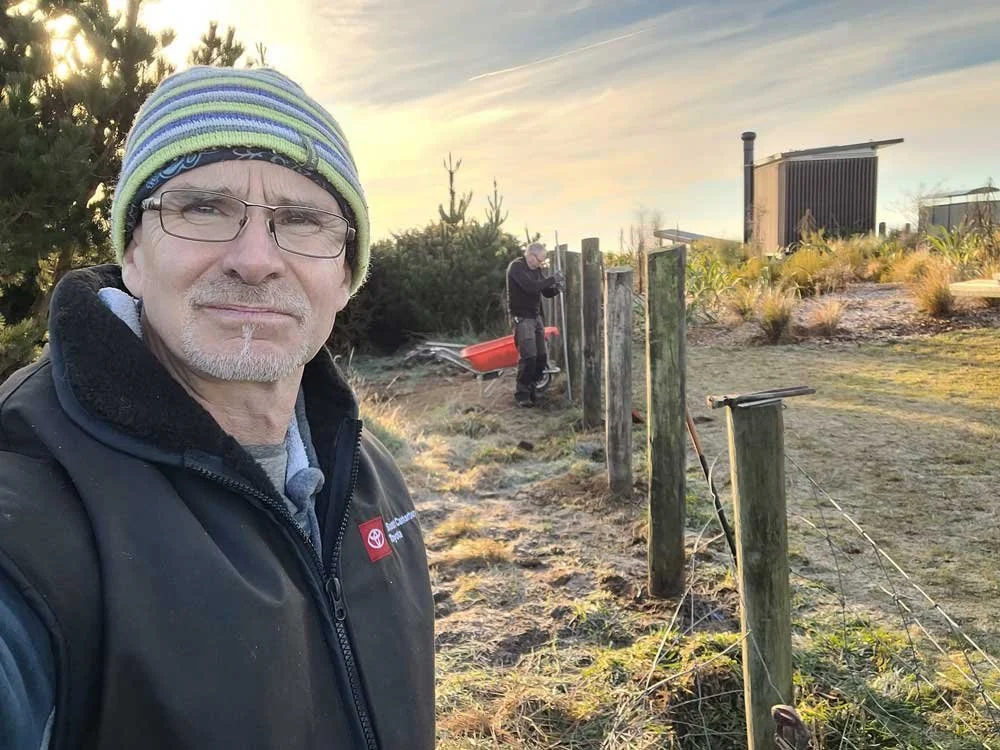
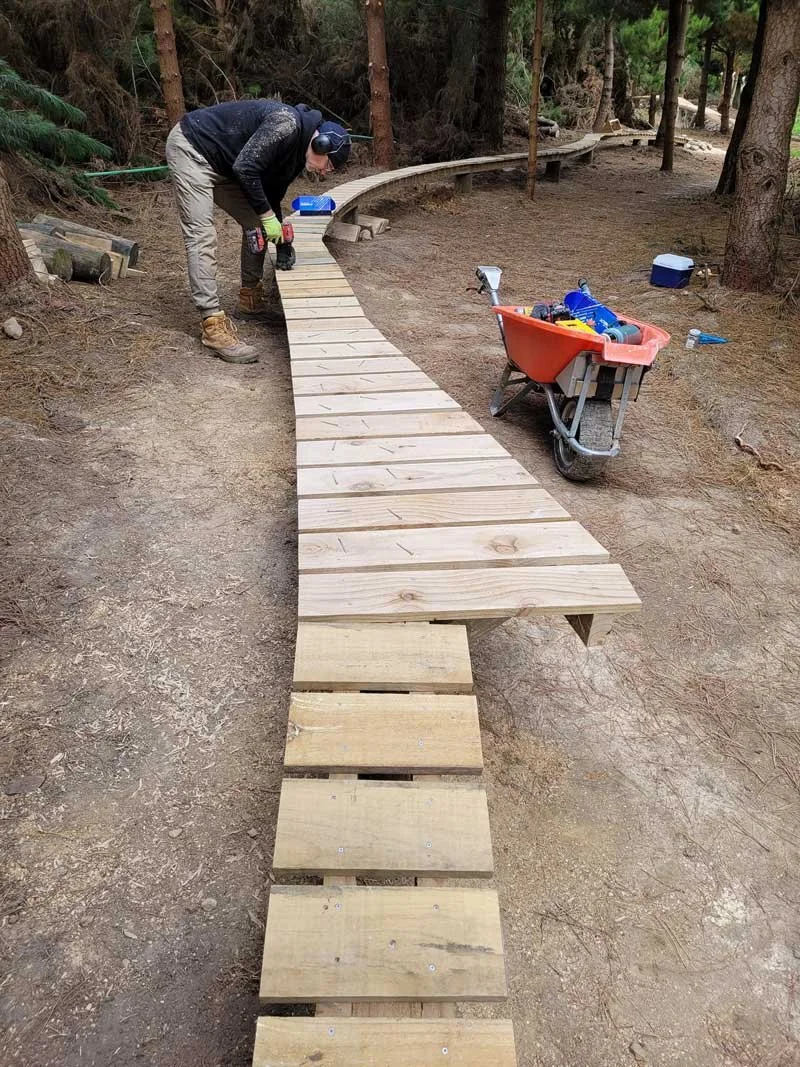
Paul Buckley and Dave Hanson on the tools.
Hungry hoppers no longer an obstacle
Buckley has been mountain biking since the 1990s and has lived in the district for more than two decades, after emigrating from Manchester in the UK. Asked for a memorable trail moment, one incident still stands out.
“I once got taken out by a big wallaby jumping out in front of me when night riding the trails,” he says. “I went flying over the handlebars into the gorse, while the wallaby just looked at me and hopped off.”
Those encounters are now a thing of the past. Pest wallabies have been eliminated from the eco sanctuary, allowing native bush and birdlife to thrive - and making the trails safer and more enjoyable for riders.
When it comes to a favourite trail, Buckley says it’s hard to choose, but one stands out.
“If I had to pick one, it would be Flying Falcon, as it encompasses both machine-built flow and old school, steep, hand-built trail.”
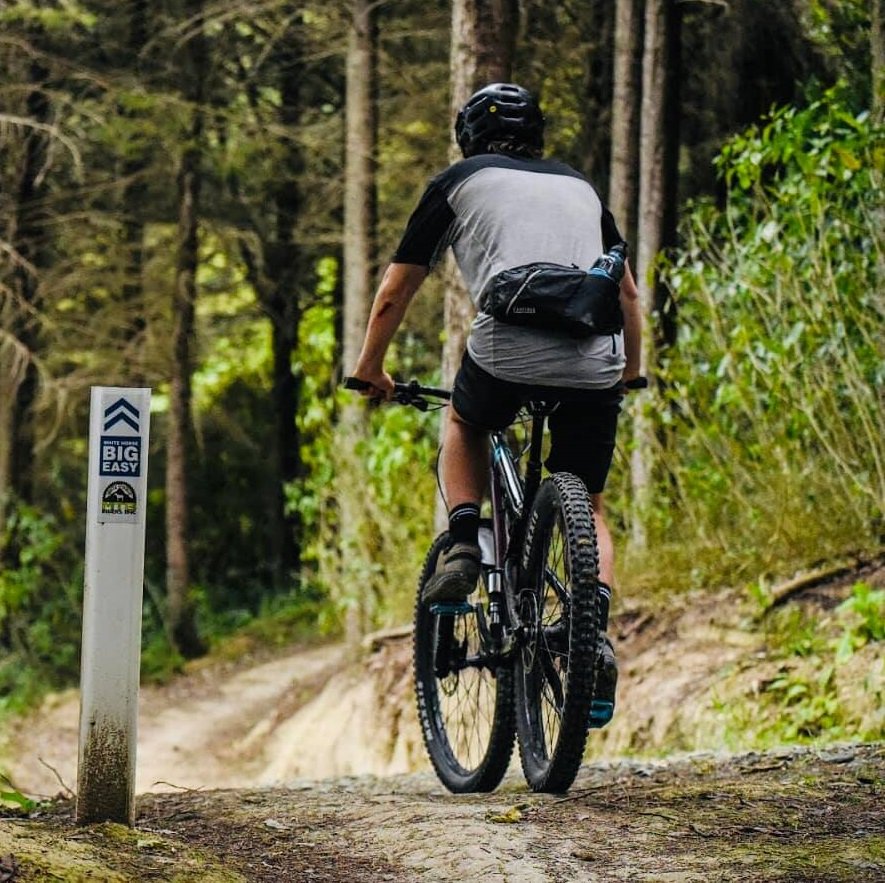
Easy rides, harder climbs, and everything in between - the trails in the hills over Waimate cater for all levels.
Membership support doesn’t mean volunteer hours
While the trail network is used by many, it’s maintained by a relatively small group. The club currently has around 35 to 40 financial members, and would welcome more.
Importantly, paying a membership does not come with an expectation to volunteer. There’s no requirement to attend working bees, help at events or commit time. Simply being a member helps support trail maintenance, national affiliation and future funding applications.
For those who do have the time or interest, involvement is always welcome - but entirely optional.
If you ride the trails and value what’s been built here, a low-cost annual membership is an easy way to support the work behind the scenes.
Membership is $15 for an individual or $20 for a family. More details can be found on the Whitehorse MTB Riders Facebook page - click the sign-up button at the top.
Ultimately, it’s the feedback that keeps the effort worthwhile.
“It’s a win every time we get glowing, positive feedback from riders visiting the area,” Buckley says. “We never get tired of hearing that people just can’t believe what we have achieved here in such a small town.”