Nick Murney
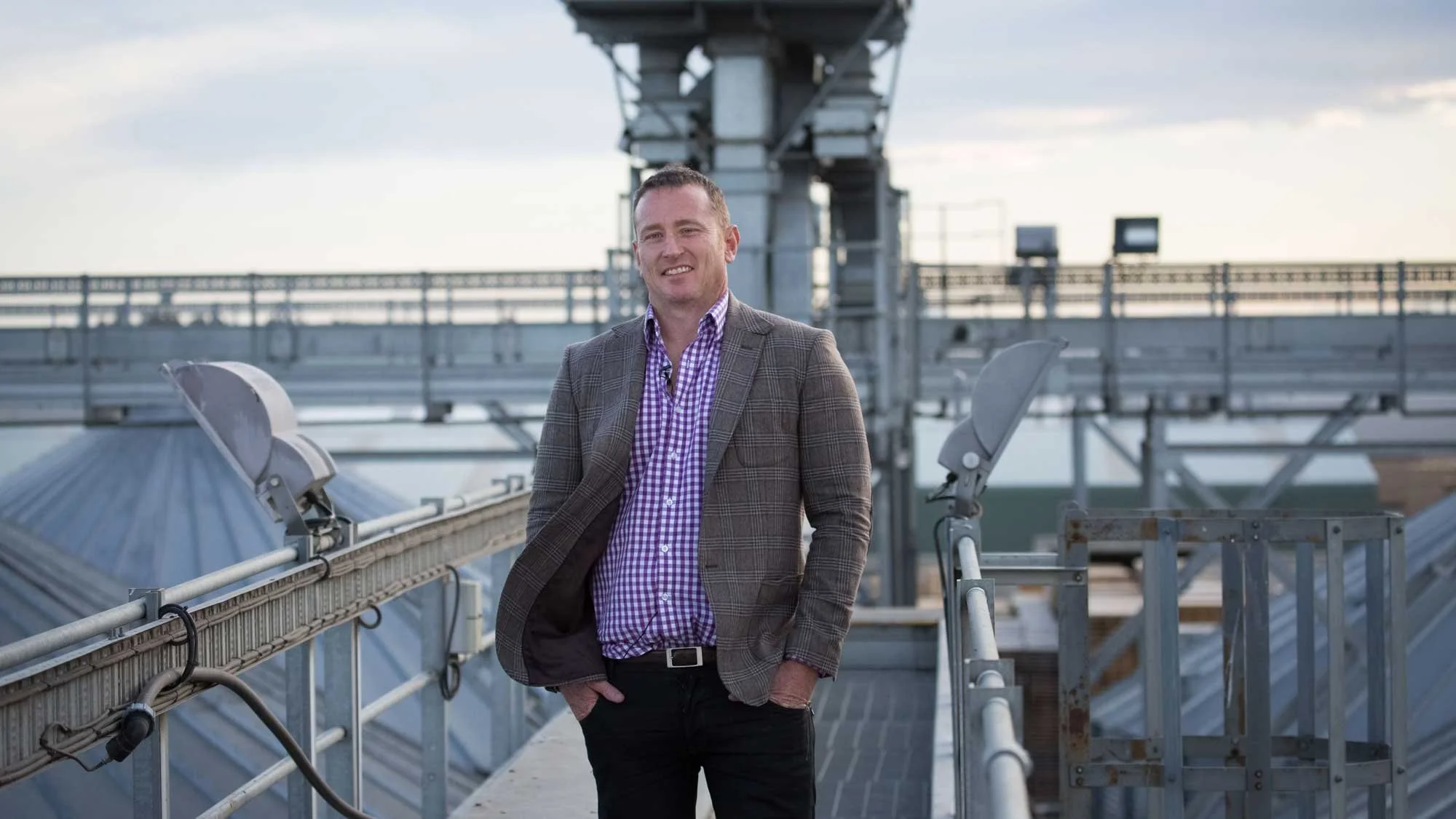
I first met the Waimate Murneys on the other side of the world, in London, in the early 2000s.
They were a tight-knit group: Nick, Ben, Matt, Sean and Jayne, along with future Murneys Ali and Brenda.
They were funny, fiercely loyal and knew how to have a good time. They were also a formidable bunch if you were silly enough to get on the wrong side of them or one of their friends.
More than 20 years later, I sat down for a yarn with Nick about growing up in Waimate, the benefits of adversity and how it led him to finding his path to business success.
The benefits of adversity
Nick grew up in what he describes as a working-class family. He knew if he wanted something he had to work for it.
“If I wanted a new pair of jeans, I knew I’d have to earn the money myself.”
He struggled at school with dyslexia, it meant he needed extra help with maths and reading. By the time he reached fifth form, he was earning money working in shearing gangs part-time.
Eventually, he was told not to come back to school.
Life in the shearing gangs helped Nick realise it wasn’t the future he wanted.
He enrolled at Lincoln University to study wool technology and got a taste for study, and because he was finally interested in what he was learning, he discovered he could do well.
Nick decided to continue towards a degree, knowing he would have to work hard, he did.
“That was a real turning point. I realised I wasn’t stupid.”
Looking back, Nick believes the adversity he faced - dyslexia, struggling at school and beginning work at 14 - gave him foundations that would serve him well throughout his life and career.
“I didn’t like it at the time, but it taught me how to work and not to give up. You realise those things were actually good for you.”
I see why you did that
After graduating, Nick headed to London, where his commerce degree opened the door to a job with Merrill Lynch, one of the world’s largest financial services companies.
He spent five years with the firm, building his career and putting himself in a strong position financially.
“I was young and didn’t really know how to spend money, so at one stage I ended up transferring a decent chunk of pounds home.”
Nick’s father, Mick, had access to his bank statements and couldn’t help but notice.
“When I was working in the sheds and told Dad I wanted to go to university, he thought it was a stupid idea. But when he opened that bank statement, he said, ‘I see why you did that.’”
A head for business
When Nick and Brenda returned to New Zealand, he joined Ernst & Young (EY) as a tax accountant, completing further study for the role.
But it was business strategy that really interested him - and this was where the dyslexia that had caused him difficulties at school became an advantage.
“I realised I could form ideas and maps in my head that other people couldn’t.”
From EY, Nick moved to Solid Energy. Tax accounting wasn’t his calling and he was preparing to leave when he was asked to help with a subsidiary oil business that was in trouble.
“That was where I learned how to run a business.”
Nick became its general manager. When it was put up for sale Nick found himself pitching it to prospective buyers - while considering buying it himself.
One of those who came to take a look was Midland Seeds director Duncan Storrier, who Nick knew socially.
“Duncan said, ‘Nick, if you’re going to have a go, have a go.’”
So, in 2012, backed by a group of shareholders, he did.
Learning the hard way
“And this is where the story gets interesting,” Nick said.
Just two years after he took ownership, the business, Pure Oil NZ, was caught in a sharp market downturn when oil prices dropped by 70 per cent.
“I had to learn how to keep it going, find more customers and make more sales. It was stressful, but I learned far more when business was hard than when it was easy.”
Once the business emerged from that difficult period, Nick was able to focus on growth. He began hiring people and investing more time in both the team and the business, and it started to lift.
“In business you can expect setbacks but keep an overarching view that you will succeed. You keep getting up and you keep going.”

Pure Oil’s retail brand has won multiple awards including gold at the 2025 and 2026 Outstanding Food Producer awards for its rapeseed and sunflower oils.
Putting values on paper
Looking for clarity about the next stage of growth, Nick completed The Icehouse Owner Manager Programme. The intensive five-month course brings established business owners together with coaches, experts and other entrepreneurs.
One of the most valuable outcomes was defining the company’s values - putting on paper the principles Nick had previously carried in his head.
“Having our values on paper helps guide our people. We hire based on them, because when someone’s values align with ours, they tend to do well here.”
One value, ‘We find a better way’, is something Nick now recognises in himself from a young age.
“I always thought I was lazy, but actually, I was always trying to find a better way of doing things.”
Where to next
Pure Oil recently entered a joint venture to acquire an oil refinery in Nelson - bringing the refining process, which had previously been outsourced, into the business.
It means Pure Oil can now manage every stage of its supply chain, from sourcing and producing the oilseed crops through to refining and supplying the finished product.
“It gives us control over the whole process. Now, if there’s a problem, we’ve only got ourselves to blame.”
Nick describes the refinery as a strong asset with a great team. The focus now is on finding better ways of doing things.
“It’s quite exciting.”
Best mate Matt
One of the most influential business books Nick has read is The 7 Habits of Highly Effective People. It was given to him by his cousin and best mate, Matt Murney.
They grew up and travelled together, and Matt worked as an agronomist for Pure Oil for a while.
“I really enjoyed working with my cousin and best mate at Pure Oil.”
Tragically Matt died from cancer six years ago, a devastating loss for his tight knit family and friends.
“Losing Matt was a massive loss and a life-changing event for me. I still miss him six years later.”
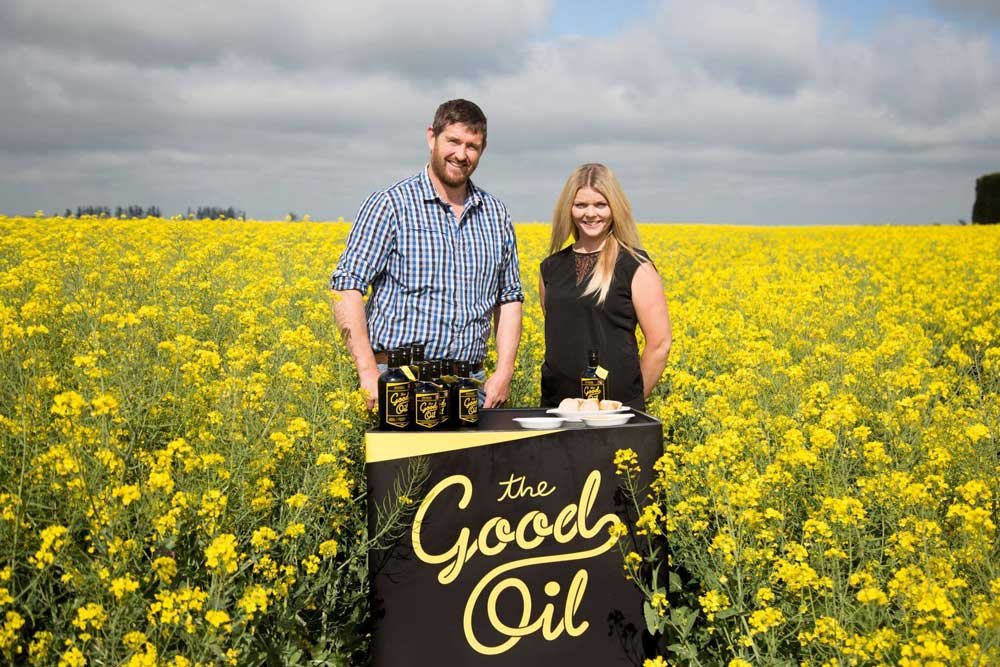
Matt Murney and Kristie O’Donnell in a Good Oil promotional photo.
Business in the blood
Nick’s not the first of the Waimate Murneys to find business success.
His “uncle and friend” Hank Murney, who passed away recently, founded RX Plastics in Ashburton and built it into a highly successful business.
Hank showed Nick what could be achieved with a good idea, determination and a willingness to back yourself.
Perhaps the lesson here is that growing up in a small town is no barrier for national business success.
A Waimo at heart
Nick and Brenda now live in Sumner with their children, Luke and Alice. In some ways, its small-village lifestyle reminds him of Waimate.
Life is good. Nick and Brenda have been together for 27 years, and despite him feeling like his kids haven’t had the benefit of adversity, he just hopes they will be good people and work hard.
He offers career advice, but doesn’t tell them to just follow their dreams.
“That’s bullshit. Get a good education, work hard and do your job.”
Nick reckons growing up in Waimate was great.
“The freedom was off the charts.”
Many of his closest friends are the ones he grew up with and his connection to his hometown remains strong, although he rolls his eyes when I rave about how much I love living there.
“I wear my wallaby on my heart,” he jokes.