Farm diversification with layers
What started as a hunt for laying hens has now grown into a successful business supplying homes and commercial free-range egg producers with happy hens.
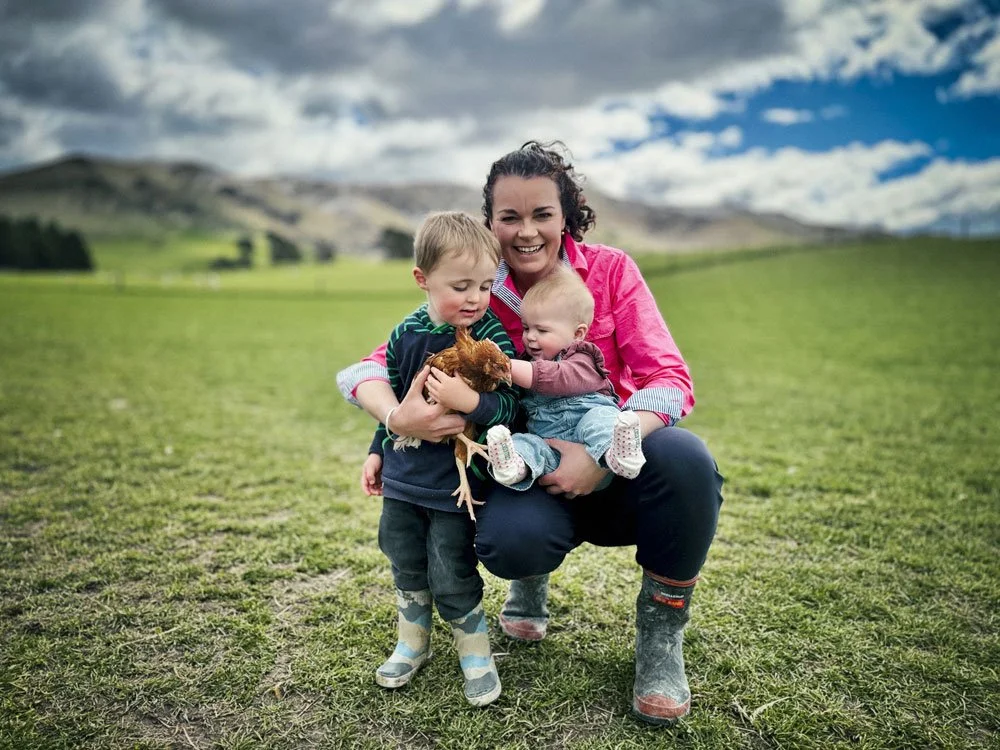
Natalie, Jack and Emily with one of their happy hens.
District Life headed out to Waihaorunga to yarn with Natalie and Adam Sutton about building a business alongside their family sheep and beef farm - one that now has the whole family getting hands-on and learning far more about chickens than they ever expected.
It’s about spotting a need, having a go and figuring out the rest along the way.
The hen holiday fund
Natalie completed an agricultural science degree with honours at Lincoln University before spending 10 years working in the agricultural seed industry based out of Christchurch, always with a few backyard chickens on the side. When she met Adam and moved to Waihaorunga, she was keen to have laying hens again, but finding some proved harder than she expected.
“Living rurally, having an egg in the house can feel a bit like having takeaways on hand - it’s a quick meal when you need one.”
For Natalie and Adam, who were already looking at ways to diversify the farming business, it presented an opportunity. Her aunty, who had experience rearing hens, told her grab a couple of hundred chicks and see how it goes. Natalie decided to have a go, it could be a good side hustle and create a holiday fund.
Six years later, The Chicken Lady has grown well beyond that, rearing regular batches of pullets for household customers and commercial free-range egg producers across the South Island.
“And now we have no holidays and no funds,” Natalie jokes.
Learning coop by coop
To kick things off, Natalie advertised her point-of-lay pullets in The Waimate Trader and Oamaru Mail and delivered directly to customers’ homes.
The “coop to coop” delivery system was a great way to build relationships. Natalie met customers at their homes, saw their set-ups, heard their questions and discovered what worked - and what didn’t. Most customers at that stage were households wanting four to six chickens for fresh eggs at home.
Going coop to coop is also how Natalie got the business name.
“I would arrive at a house, knock on the door and hear someone inside call out, ‘It’s the Chicken Lady!’”
A lot of the business’s growth since then has come through word of mouth.
“We can often tell where we’ve just made a delivery because enquiries start coming in from that area, asking when we’ll be back in town. It’s a lovely way for a business to grow, and we always appreciate customers taking the time to recommend us.”
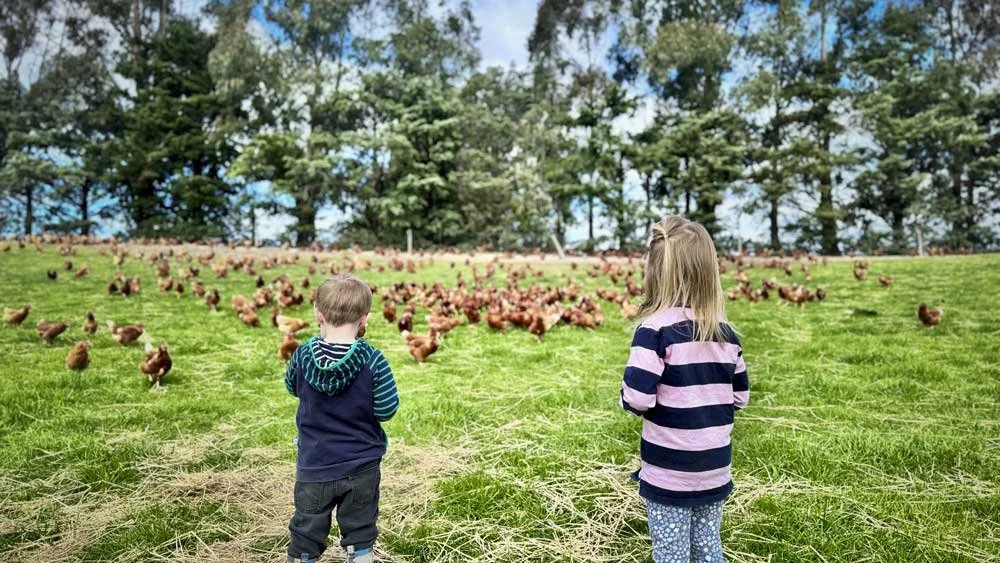
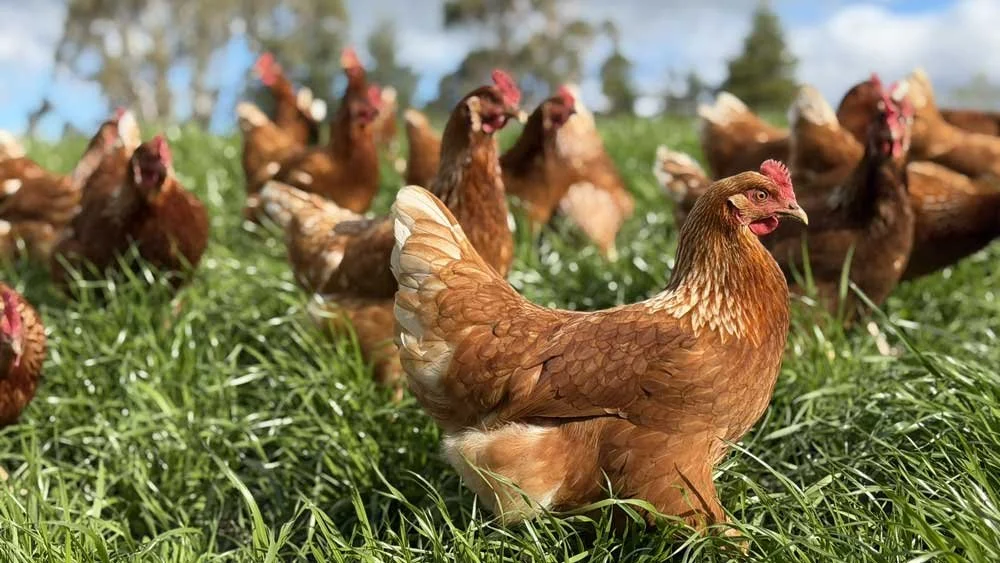
Jack and Charlotte at home among the free ranging hens.
Going commercial
The move into supplying commercial free-range egg farms also started locally, when Natalie contacted Good Life Free Range Eggs at Hunter, near Waimate.
“I said, ‘You do eggs, I do chickens - can we work together?’”
They could. The Chicken Lady sold 200 pullets in that first order - and then Natalie and Adam had to figure out how to get them there.
“We were stoked to make the sale, so we figured it out - two trips with a ute and a modified delivery trailer and we got them there safely.”
As commercial orders grew alongside the domestic customer base, the next thing that needed rethinking was delivery. By then The Chicken Lady was covering an increasingly large geographic area, and delivering coop to coop was becoming impossible to schedule.
They tracked where their customers were and developed delivery routes with central collection points. Now, the regular household routes cover South Canterbury, North Otago, Otago and Central Otago, with additional runs into other parts of the South Island when demand and bird numbers allow.
The locations along the way are carefully chosen, many are near playgrounds, giving the Sutton children - and customers’ kids - somewhere to burn off some energy.
“As well as a safe spot for children to pick their specific chickens from each delivery crate.”
The website has been another game-changer. Routes can now be planned well in advance, with customers able to see upcoming batches and collection points and order online.
Natalie says being prepared to learn and modify things along the way has been one of the biggest lessons.
“You don’t know what you don’t know.”
A business that works alongside the farm
What Natalie and Adam have created is a diversification that works alongside the family’s existing sheep and beef operation.
Adam manages the wider farm and is integral to The Chicken Lady too, handling repairs, heavy lifting and plenty of practical problem-solving.
“He’s always coming up with modifications or inventive ways around a problem,” Natalie says.
He also does his share of delivery runs, which gets him off the farm - although it can create a slightly confusing moment for customers expecting The Chicken Lady only to find a bearded man waiting with their hens.
For Natalie, having the business based at home has another major advantage. She and Adam had three children within three years and three months - Charlotte, 4, Jack, 2½, and nine-month-old Emily.
The children are either getting amongst the hen and farm work or being looked after by their neighbours, grandparents or great grandmother, Sheila, something Natalie and Adam are very grateful for.
And when the new chicks arrive on the farm, the kids are always keen to help.
“It’s the most special day. They love unpacking the chicks.”
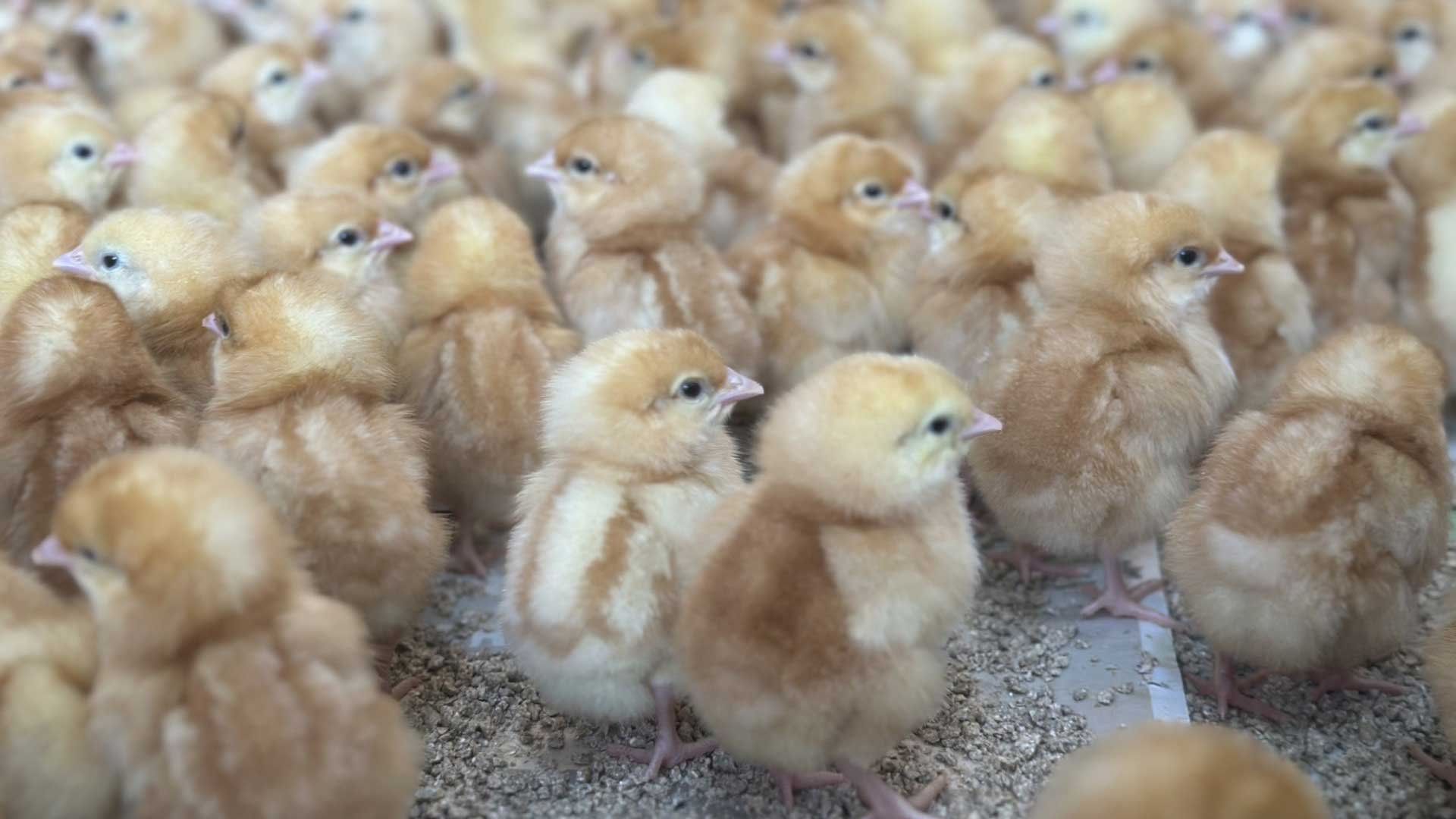
The first stage involves keeping the chicks warm and safe. How chickens are reared an affect how they perform later.
From day-old chicks to ready-to-lay hens
The Chicken Lady is a pullet-rearing business rather than an egg producer. Natalie and Adam take female Brown Shaver chicks from a day old and rear them until they are ready to move into either a commercial free-range egg operation or a household flock.
Brown Shavers are their breed of choice - productive brown-egg layers with inquisitive, generally calm natures that also make them well suited to backyard flocks.
But a good laying hen needs to be reared right. How the birds are fed, cared for and developed can affect how they perform later - and there’s plenty involved in getting them ready.
That even includes teaching them how to perch. At one stage in their development, the Sutton family physically put the young birds onto their perches in the evening until they figured out how to do it themselves.
For Natalie, feedback from customers makes the work worthwhile.
One comment in particular - “I thought all chickens were the same, until we had your chickens!” - was, she says, “testimonial gold”.
“We live for it. Happy customers keep us going.”
The household market is evolving too. Natalie is seeing more interest from people wanting a homesteading-style life, even if they only have room for a few hens. Homestays, farm accommodation and small tourism businesses are another growing group of customers, giving guests the chance to collect a fresh egg and experience a little of rural life.
Passing on practical skills
One aspect of the business Natalie particularly enjoys is seeing young people get involved.
The Chicken Lady supplies chicks for some preschool, school and agricultural class projects, giving children the chance to see first-hand how an animal grows and learn the responsibility involved in caring for it. Natalie is always happy to take the time to teach young people and encourage them to consider career opportunities in agriculture.
Some young customers even sell their eggs and save the money to buy their next pullets.
That fits perfectly with Natalie’s wider passion for agriculture and rural communities.
Alongside The Chicken Lady, she is the South Canterbury Farming for Profit facilitator for Beef + Lamb New Zealand, helping organise practical events and discussions for farmers.
She also coordinates weed and pest control activities for the Hakataramea Sustainability Collective, while Natalie and Adam also run small on-farm crop evaluation trials in Canterbury and Southland.
“Just to make sure we’re never short of something to do!” she jokes.
What’s next?
Natalie and Adam can see opportunities for The Chicken Lady to grow further, but whatever comes next, they want the business to remain based in Waimate District.
“We’re extremely passionate about this region, the town and the people here,” Natalie says.
Local people already help out when needed, and Natalie and Adam are always happy to hear from local teenagers interested in gaining some hands-on work experience.
Six years after deciding to grab a couple of hundred chicks, there’s more to The Chicken Lady’s success than just being prepared to give an idea a go.
It’s meant early starts, long delivery days, raising batch after batch of chicks, adapting when things haven’t worked - and fitting it all around a working sheep and beef farm, part-time work and three small children.
Hard work has been the other essential ingredient - and the Suttons certainly aren’t afraid of that.