The Marquette Disaster
During the First World War, a lot of the district’s young people were a long way from home.
Back home, life carried on. Farms still needed running, shops still opened, families got on with things - while waiting on letters, and sometimes, bad news.
In 1915, that news came with the sinking of the Marquette, a troop ship with British and Kiwi soldiers and medical staff onboard.
“Ominous rumours have received sad confirmation, and it is now definitely known that at least ten New Zealand nurses (including four or five well-known and cherished in this District) were drowned in consequence of the torpedoing of the transport Marquette”. Waimate Advertiser Weds, Nov 3rd 1915.
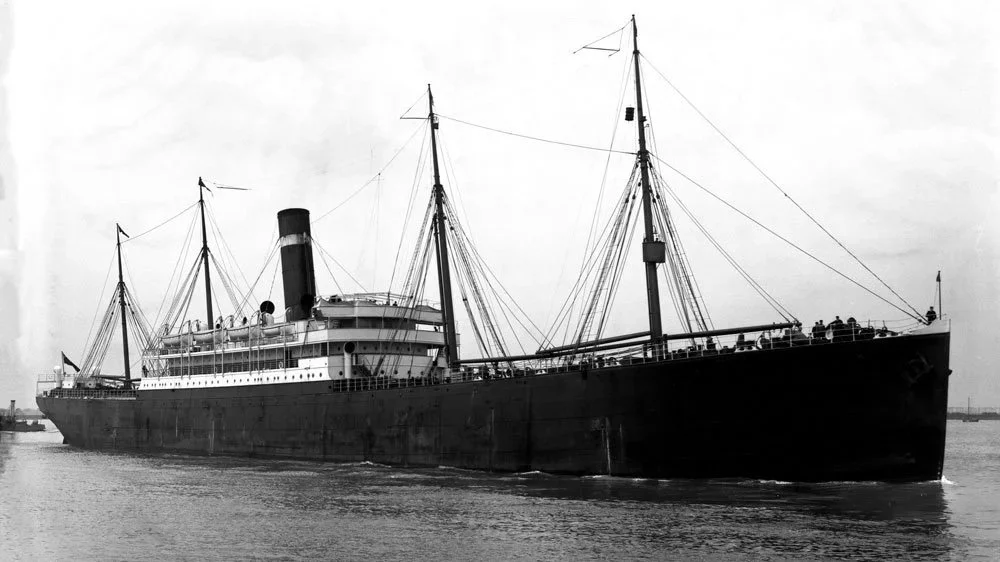
Louis Claes, CC0, via Wikimedia Commons
The sinking
The Marquette, a grey transport ship, was sunk by a torpedo from a German submarine in the Aegean Sea on October 23, 1915.
Of the 741 people onboard, 167 lives were lost, including 32 New Zealanders - 10 nurses, 19 male orderlies, and three soldiers.
They were part of a group of soldiers and medical staff, including local nurses from the No. 1 New Zealand Stationary Hospital, crossing from Egypt to Greece.
It was known German submarines were patrolling the area, but the ship travelled unmarked, rather than as a clearly identified hospital ship, which should have offered protection. There were hospital ships available at the time. In hindsight, it’s widely seen as a decision that should never have been made.
Some on board even spotted the torpedo cutting through the water moments before impact.
They were within an hour of their destination, Salonika, when the explosion hit.
The ship sank within ten minutes, with nurses, soldiers and crew still on board. Many who made it into the water later died while waiting hours to be rescued.
“It was pitiful to see the nurses and soldiers tiring in their frantic struggles and finally releasing the grasp of the gunwale, floating for a few seconds and then slowly sinking without a murmur”. Waimate Advertiser Weds, Nov 24th 1915.
It was later reported the nurses refused to get into the lifeboats until most of the soldiers had been saved.
“The nurses stayed on deck cheering the Tommies until only a few men remained to help the women into the boats”. Waimate Advertiser 24 November 1915.
It was one of the first times the war hit home in a different way - New Zealand women were among those lost.
Local tragedy
This tragedy hit the Waimate District hard. Six of those lost were either from Waimate or had strong ties to the area.
A “gloom” was cast over the town when the news reached home, and flags were flown at half-mast.
Nurses Mary Gorman, Catherine Fox, Isabel Clark, Marion Brown and Nona Hildyard, along with Private James Samuel Bird, were all well known and deeply respected in the district.
Nurse Isabel Clark
Isabel Clark grew up in Ōamaru and attended Waitaki Girls’ High School.
She completed her nursing training at Waimate and Ōamaru hospitals, and was working in Auckland when she resigned to enlist.
Among other memorials, Waitaki Girls’ High School holds an annual essay competition in her name.
Nurse Catherine Fox
Catherine Fox was born at Cardrona, before her family settled in Studholme in Waimate District.
She trained at Dunedin Hospital, and later nursed in Waimate, Christchurch and Auckland.
So determined to enlist, she made plans to pay her own way to England to volunteer for service in France. Instead, she was accepted by the New Zealand Government and sailed on the hospital ship Maheno.
Nurse Marion Brown
Marion Brown was from Southland and nursed in Waimate for a year - six months at the Public Hospital and six months in charge of Dr Barclay’s Shearman Street hospital.
After the tragedy, Dr Margaret Cruickshank wrote to her parents.
“I could ill spare her, but when she volunteered for active service I felt she was just the kind of nurse most wanted.”
A survivor, Mabel White, saw Brown and Isabel Clark on the deck of the ship moments after it was hit.
She later recalled the two women joining hands and walking together off the deck, leaping into the sea. Neither survived.
Nurse Nona Hildyard
Nona Hildyard was the youngest sister of Edith Pitcaithley, who was married to Waimate High School principal George Pitcaithley.
According to Dr Cruickshank, she spent much of her childhood in Waimate and, although she did not know her in a nursing capacity, remembered her as having “the happiest and most loveable of dispositions”.
Hildyard was injured by a falling lifeboat and later died in the water before a rescue ship arrived.
Survivors reported that she sang while in the water to keep spirits up.
Nurse Mary Gorman
Mary Gorman, was born in Waimate. She trained at Waimate Hospital and worked as a sister at Wellington Public Hospital.
According to Dr Margaret Cruickshank, Waimate Hospital’s medical superintendent, Dr Barclay, considered her to be one of the best nurses the hospital had produced.
Mary was known to be a strong swimmer. According to eye witness reports she jumped into the sea to save her non-swimmer friend, Nurse Catherine Fox. They were not seen again.
Private James Samuel Bird
James Bird was from Painstown, Waimate.
He was born here and trained with a Queen Street chemist. After qualifying, he moved to the North Island for work.
He enlisted, was sent to Egypt, and was posted to No. 1 Stationary Hospital in Port Said.
He volunteered to serve to save the lives of others, and died aged just 25.
A tribute that would soon come full circle
Dr Cruickshank was asked to write an appreciation for the Waimate Advertiser about the nurses.
It’s a powerful piece to read now, knowing she herself would die three years later while serving the community.
“We are glad that New Zealand women serve so gladly, that they are proving themselves worthy to be on the Roll of Honour beside their brothers, and though we mourn the separation of their bodily presence from us, their spirits will never die, but will ever urge us to more unselfish service.” Dr Margaret Cruickshank.
We still remember them here
These young people are gone but they have never been forgotten.
Their names are memorialised in a number of places around Waimate, and across New Zealand, including:
The memorial gates at Victoria Park.
A plaque held at the Waimate Museum, originally from Waimate Hospital. The Womens ward at the old Waimate hospital was named the Marquette ward in their honour.
In 2015, a plaque was added to the Waimate Hospital monument near the Council buildings. It was funded by nurses from Lister Home, with support from Waimate Rotary and the Waimate District Council Heritage Fund.
A totara tree planted in their honour at Bushtown. The certificate is on the wall at Lister Home.
This Anzac Day we’ll remember the service women and men from across the districts at memorial services.
Updated from version first published on Explore Waimate.