The community building a trail set to supercharge Waimate’s economy and lifestyle
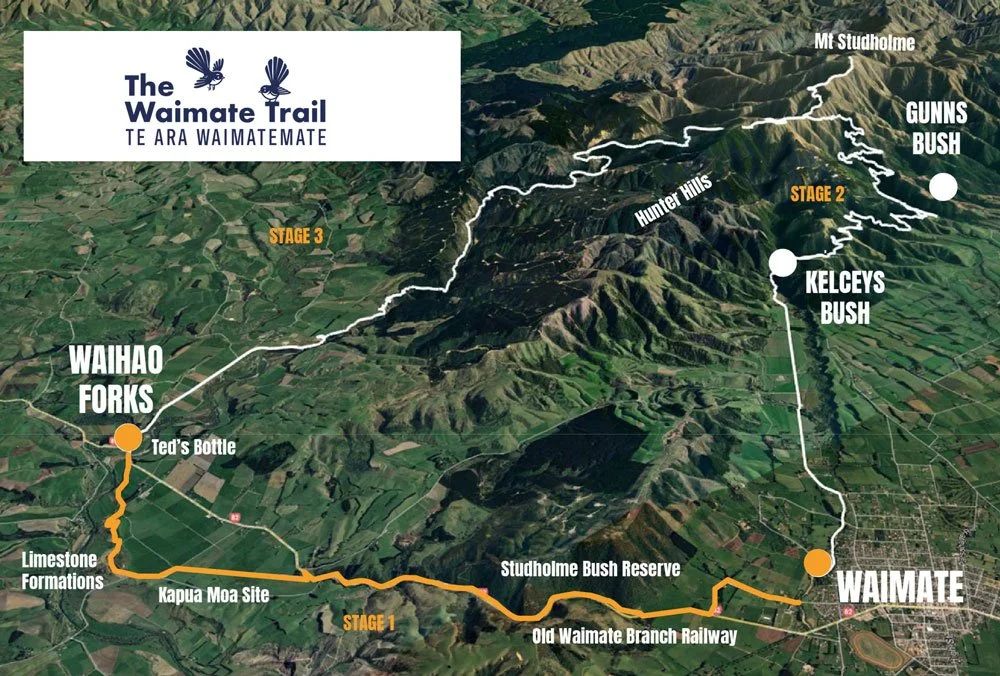
Something’s been brewing in Waimate over the past few years - and it has the potential to become an economic game changer for the district and wider region.
The Waimate Trail - Te Ara Waimatemate is an ambitious community-led project. It will be built in three stages, to become a 67km loop trail connecting three native bush reserves.
Led by Waimate2gether (W2G), the project has brought together local farmers, volunteers, community groups, businesses, Waimate District Council, central government and funders from across the country.
As the first stage, from Waimate to Waihao Forks, edges closer to opening, we caught up with some of the people behind the scenes and looked at what the trail could mean for the district’s future.
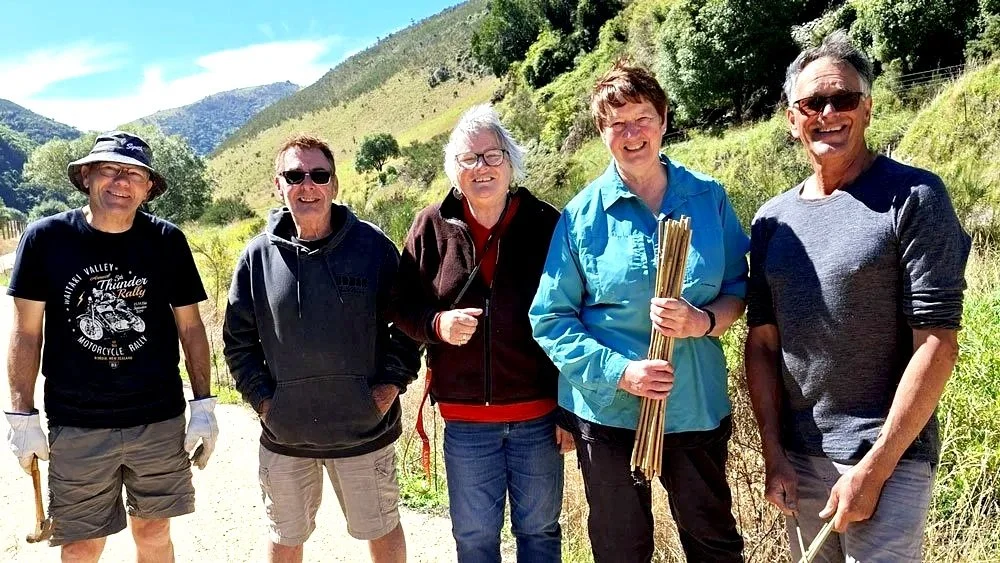
Waimate2gether committee members Peter Collins (Chair), Peter Paterson, Glenda Begg, Sheryl Frew and Rob Smith. Not pictured, Joy McIvor, Tony Alden and Clare Saunders-Tack.
How the idea took shape
There’s an extensive network of trails in Waimate District, but the idea for a longer one had been brewing for some time.
During community consultation led by W2G in 2018, it emerged as high on the community’s wish list.
“The project initially seemed too large to undertake,” W2G Chair Peter Collins says.
“But following the completion of the White Horse development, the committee agreed the benefits to the district would be substantial.”
W2G engaged master trail builder Hamish Seaton to carry out a feasibility study and decided the project was worth pursuing.
Hamish’s track record includes some of New Zealand’s best-known trails, including Alps2Ocean, the Paparoa Track, Old Ghost Road and the Kawatiri Coastal Trail. He designed the Waimate Trail and continues to oversee the project.
Plans are also underway for sculptures and storytelling elements along parts of the route, helping tell the story of the land and its history.

Jo Sutherland, Waimate2gether’s trail project manager.
Connecting town and country
The first stage runs from Waimate to Waihao Forks.
It extends the existing track network out further into the countryside, helping connect urban and rural communities.
“Part of the community-led development strategy was building on what was already here,” trail project manager Jo Sutherland says.
“People from town will be able to run, walk or bike out to the country for lunch, and vice versa.”
The trail follows the old railway line through the Waimate Gorge and past Studholme Bush.
Along the way it passes Kapua wetland - home to the largest find of moa bones in Aotearoa - before winding through limestone formations above the Waihao River. Scenery that, until now, has mostly only been viewed from a distance.
Because much of stage one follows the old railway line, the gradient is gentle compared to some of the district’s hill tracks.
“Accessibility was another big thing. We want to see everyone using it.”
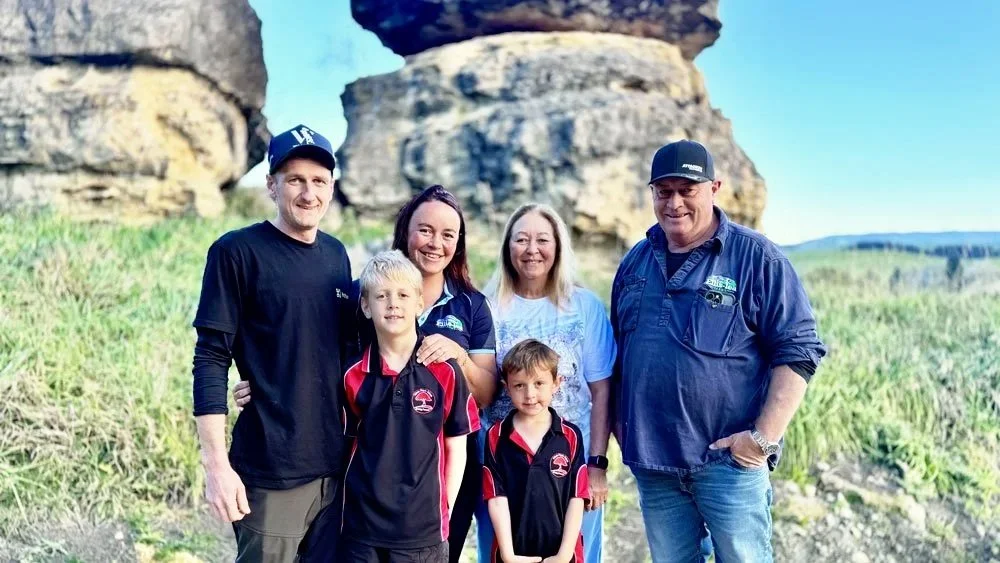
The Ellis-Lea Farms team: Martin, Leo, Kelsie and Tommy Trebuľa and Karen and Dave Ellis.
Opening the farm gates
Getting to this point has taken years of conversations, planning and relationship building.
Three commercial farms have agreed to let the trail pass through their properties, opening up parts of the landscape the public would never normally get to experience.
“You can’t do a project like this without landowner support,” Jo says.
“It’s about figuring out what works for them. It’s a big deal. We can’t thank the Ollerenshaw, Murphy, Ellis and Trebuľa families enough.”
For Dave and Karen Ellis, agreeing to have the trail cross their farm came down to helping the community and sharing a landscape they’ve enjoyed for years.
They also hope people understand they’re moving through working farmland.
“It’s still a commercial farming property at the end of the day,” Dave says.
“But it’s nice to be able to let people through and we hope the community enjoys it.”

Miss Waimate 2025 - the trail fundraiser that brought the house down. Picture by Laura Johns Photography.
Every donation matters
One of the biggest challenges the committee faced was securing funding.
For a project like this external funding was crucial and there are limited funding streams available.
“Funders like to see collaboration, and local buy-in” Jo says.
“That’s where the community and our local council have been amazing. Every dollar donated, every event ticket sold, showed that the community was behind it”
Before long, even the Government took notice. In February 2026, Tourism Minister Louise Upston announced $200,000 for the trail through the Ministry of Business, Innovation and Employment.
Asked about a favourite moment so far, Jo laughs and points to Miss Waimate 2025 - a parody pageant featuring local men, many of them farmers, competing for the inaugural title.
“It brought the community together in such a fun way. We’re all still laughing about it.”
Support for the trail has come from neighbouring districts and from people of all ages.
“We’ve seen donations coming in from Timaru and beyond. Schools have pitched in and too many groups to mention have volunteered, donated or run fundraisers.”
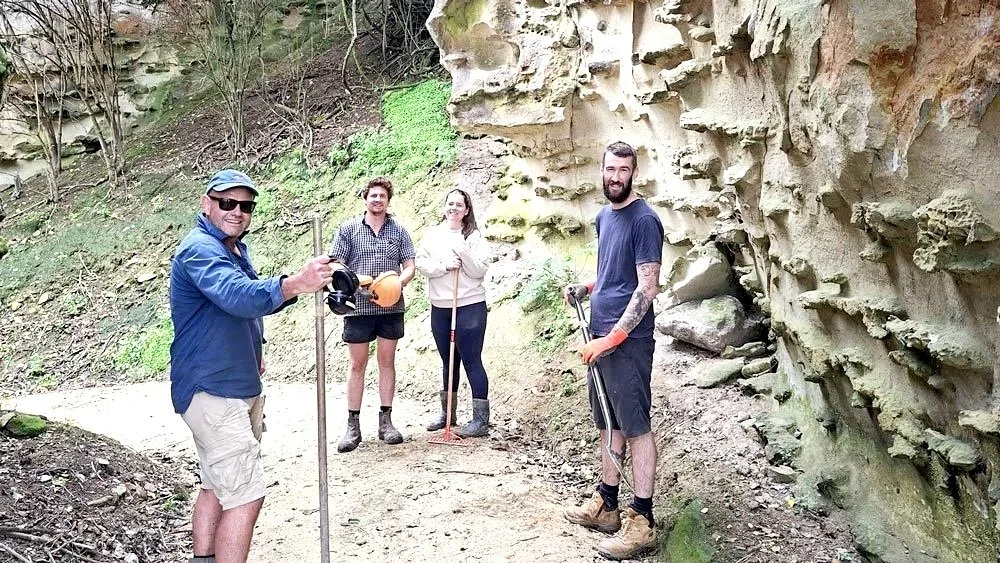
Community volunteers Johnny, Tom, Crystal and Luke putting finishing touches on a section of trail.
Economic flow-on effect
The trail is part of the district’s wider economic development picture.
Around the country, trails like these are reshaping rural areas - attracting visitors and bringing more money into local economies to support local businesses, and opening up opportunities for new ones, including agritourism ventures.
In New Zealand, the Ngā Haerenga Great Rides network now attracts millions of trips each year and contributes more than $1 billion annually to regional economies.
Trails are also increasingly influencing where people choose to live and invest, with research showing popular trails can drive both commercial and residential property demand.
Local real estate agent Julie-Anne Davidson of Red Hot Real Estate says the Waimate Trail could have a similar effect here.
“The new trail is expected to add strong lifestyle and tourism appeal to the region - a positive sign for the property market, visitor demand, and short-term accommodation opportunities.”
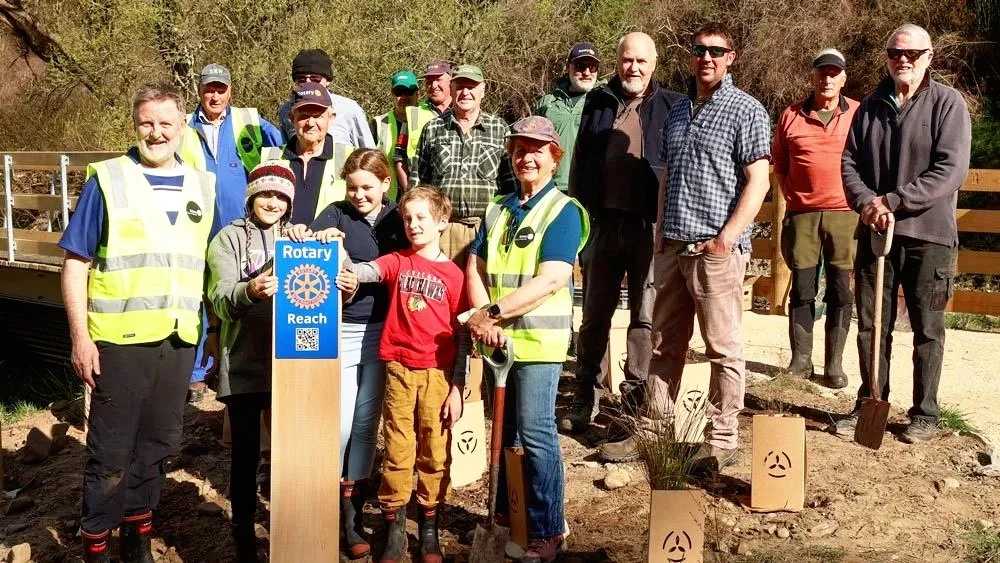
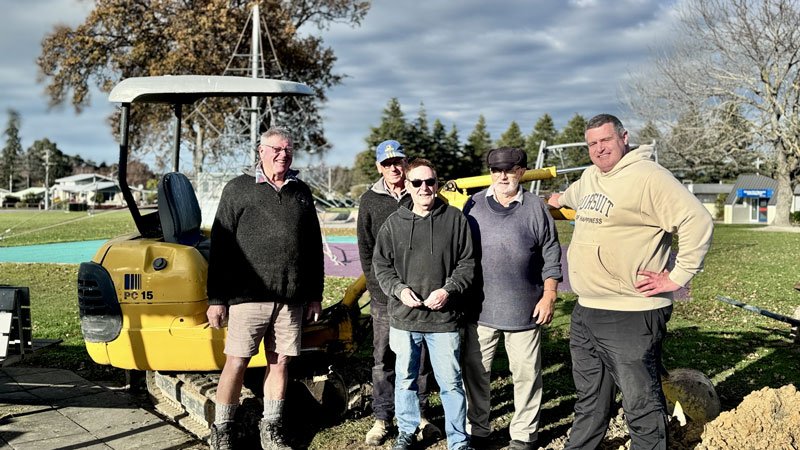
The Waimate Rotary and Lions Clubs have put in significant hours to help make the trail happen.
The trail could be just the beginning
While there is still work to do before the official opening of the first section, the finish line is finally in sight.
“We’re working toward an end of June opening,” Jo says.
“It’s hard to put an exact date on it because there are still lots of variables, especially around weather and track conditions, but we’ll keep people updated on our Facebook page.”
For the people involved, there’s excitement in seeing an idea that started around community tables become something physical on the ground.
And for Waimate, the trail could be just the beginning.
Around New Zealand, trails like these have sparked new accommodation ventures, hospitality businesses and tourism experiences.
In the coming weeks, District Life will take a closer look at agritourism and why Waimate is well placed to take advantage of growing demand for real Kiwi rural experiences.