In this Import Interview, we find out how Lyndsey Davis went from being a ‘codhead’ to a ‘Waimo’.
School wasn't her thing, something we've heard from more than a few of the successful people we've interviewed. It's far from a limiting factor.
Lyndsey's gone on to wrangle cattle in the outback, dance on bars and build successful businesses. One thing's remained constant throughout everything - she's always been prepared to work hard, take opportunities and give anything a go, in business and in life.
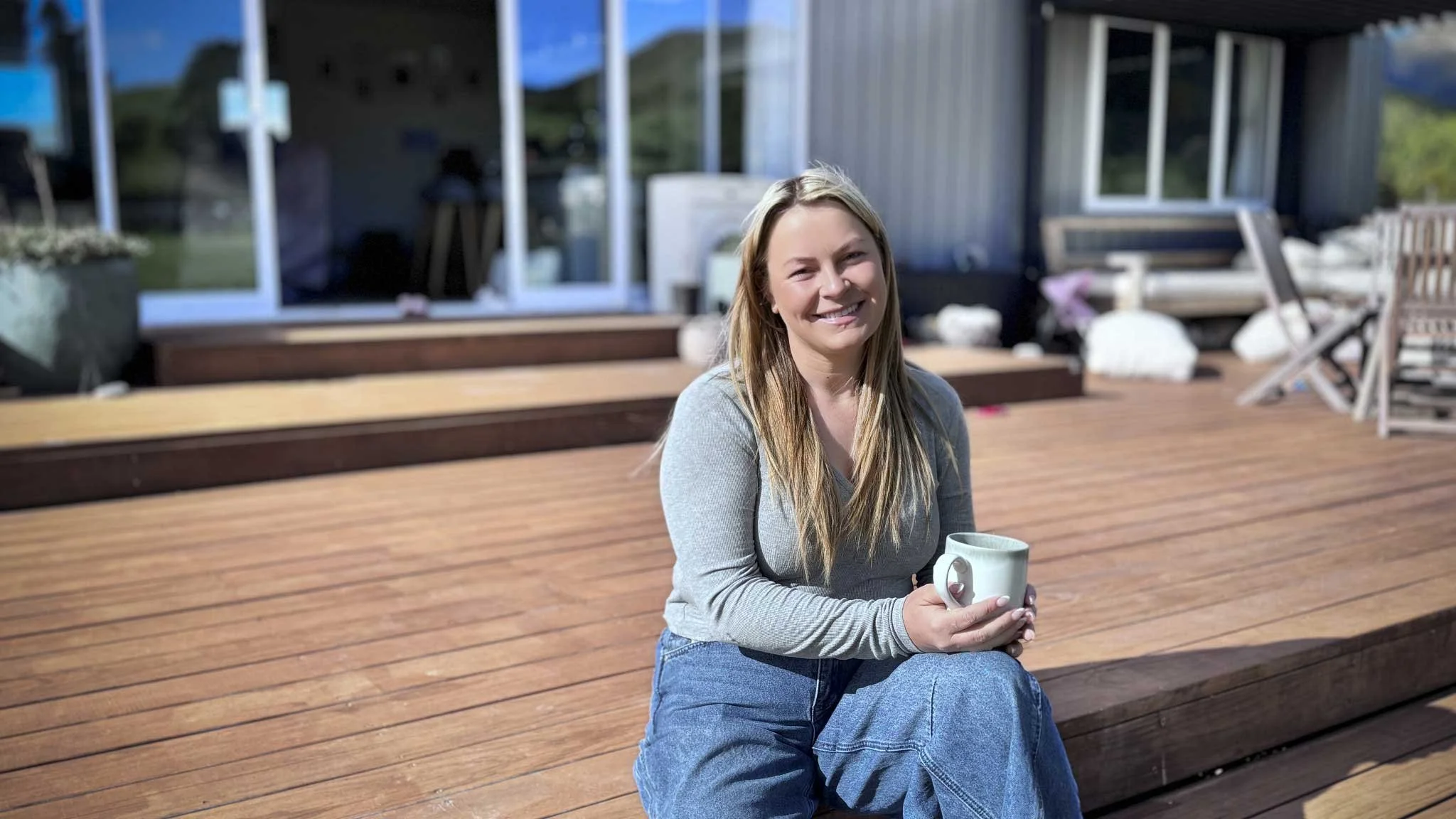
Lyndsey grew up in Grimsby in Lincolnshire, England, an historic fishing town known for its haddock and cod. Hence the nickname ‘codheads’.
And while generations of her family worked on trawlers, Lyndsey loved animals and farming. She started studying for her veterinary nursing degree but struggled to afford the travel to York, and by 21 was working at a car dealership.
"And I just thought, what the hell am I doing with my life?"
So she applied for the British Army's dog training corps and a working holiday visa to Australia.
"I thought, whatever I get into I'll do it. I'll leave it up to the universe."
She was accepted for both, but Australia won because the Army intake was a year away.
She booked a one-way ticket and apart from a week in a Brisbane youth hostel, made no further plans.
Life on the cattle stations
Lyndsey managed to find a job on Moyallen Station, an Angus cattle stud in Mitchell, Queensland.
She learnt to muster on horseback and motorbikes, work with breeding stock, assess cattle and understand the business of producing prime beef. And she loved every minute of it.
"I looked like a bit of a bush monkey when I got back to the city and I almost had to learn how to cross roads again."
There she did a bit of pub work, including a stint at the well-known Theebine Hotel
"I had some good nights, lots of dancing on the bar."
Her next station job was at Nutwood Downs, an Aboriginal-run cattle station in the Northern Territory, where she started as a cook before getting into stock work.
The property ran Brahman cattle across more than a million acres. Helicopters, motorbikes and specially modified bull-catching vehicles were all part of the operation.
The bull catchers were roofless Land Cruisers fitted with tyres on the front, used to intercept cattle that broke away from the mob. Stragglers could be caught, restrained and later collected by ute and driven to the yards.
She threw herself into it, literally, even diving on restrained bulls to hold their heads while the crew worked.
"When you're 21, and you're living your best life, you have absolutely no fear."
And despite it being a dry station, she had an arrangement with a road train driver who smuggled in Canadian Club.
After leaving, she bought a ticket to Bali off a friend, only to discover at the airport that she needed a return flight. The next available was a month away.
"Oh well, I'll be there for a month," she thought.
It's not McLeod's Daughters
Her next job was governess to two boys at Moroak Station, near the crocodile-filled Roper River in the Northern Territory.
She had no teaching experience, but the owners wanted someone who understood station life and could handle the isolation.
"People think it's going to be like McLeod's Daughters, but it's not."
She looked after two boys, who she loved, and focused on making learning fun for them.
"We'd make videos and do science experiments, I really enjoyed working there."
When she wasn't teaching, she was helping with cattle work - branding, vaccinations, dehorning and castrating young bulls.
"I would never have been able to do that in England."
But after two and a half years, her visa was running out and she wasn't able to get an extension. She was granted a tourist visa, but ultimately had to leave Australia.
New Zealand wasn't part of the plan
Knowing little about New Zealand beyond the All Blacks and Auckland, Lyndsey arrived from Darwin intending to return to Australian station life as soon as possible.
She found it freezing and remembers sleeping with thermal socks on her hands to keep warm.
She found work at the Awakino Hotel, near Mōkau on the North Island's west coast, and started asking the local farmers about work.
When one asked if she could fence, she said no, but she could learn - and of course got the job.
The country was so steep they had to ram fence posts in by hand. Lyndsey’s arms would be bruised from hammering staples into battens. She'd work on the farm all day, then race back to the pub to work behind the bar in exchange for accommodation.
She reckons her diet consisted largely of “rollies, hot chips, Speight's and Tui”.
More to explore
Lyndsey eventually took a job co-managing a dairy run-off that provided its own accommodation, eventually running the operation herself.
She got into working dogs and furthered her interest in stock work, with a Huntaway named June, a heading dog named Swan and her trusty Jack Russell Tess for added brawn.
In 2018 she trained as an artificial insemination technician with LIC, while still managing the run-off.
She then bought cattle pregnancy-scanning equipment from Australia and started her own business, alongside calf disbudding work.
When COVID-19 prevented the usual Welsh scanning specialist from travelling to New Zealand, her business took off. She now had the monopoly in the area scanning dairy and beef cattle, and bought a tiny home to live off-grid.
But after living in isolation for so long, paired with lockdown restrictions, Lyndsey decided she was ready for a change.
"I knew there was more out there to explore, and I was hungry for change, so decided the South Island was the next stop. Go and explore."
Lyndsey and her partner Will sold the tiny home, packed two utes and trailers and headed for the ferry.
Finding home in Waimate
The plan was to tiki-tour around the South Island and see what happened.
Waimate was the first stop because they had a good mate living there.
Lyndsey and Will ended up buying land on Engelbrechts Road and built a home, with the rural lifestyle they wanted but close to town, work and (eventually) childcare. Previously they'd been used to driving 1.5 hours to a supermarket.
The next business they launched was Studholme Glamping. It started after Lyndsey and Will bought ten bell tents for guests at their wedding.
Afterwards they hired them out for weddings and events. Demand was so good they eventually sold the business, keeping one tent to run as an Airbnb on their property.
It attracted visitors from all over the world as well as locals wanting a night away, earning five-star reviews and Airbnb Superhost status.
Their daughter Willow arrived in 2022, followed by son Rory.
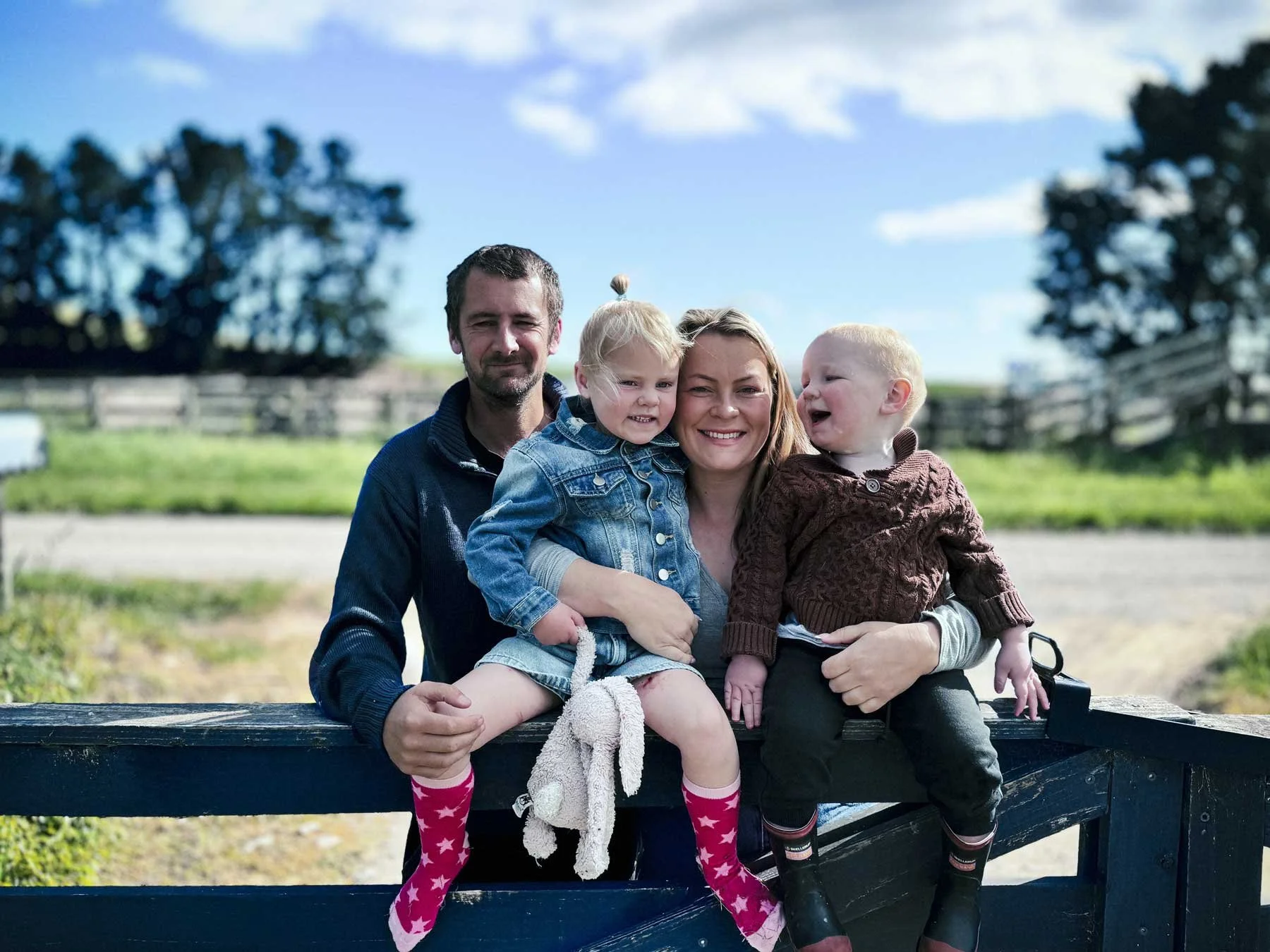
Will, Willow, Lyndsey and Rory at their home in Waimate.
The world is your oyster
Lyndsey returned to work in property management with LJ Hooker before moving into real estate sales.
"If there's a ceiling, I have to break it."
She's recently joined Arizto, after being headhunted by the company, and with plenty of people already working in real estate in Waimate, she's not worried about competition. She's more interested in collaboration.
"There's plenty of stars in the sky for us all to shine."
These days, Lyndsey and Will are raising Willow and Rory on their property, surrounded by animals and country life.
She's enjoying the challenge of her new career, particularly getting to know people and helping them through the process of buying or selling a home.
And after everything she's experienced, Lyndsey has some advice for anyone thinking about making a change.
“My life wasn’t easy growing up. I hit some pretty dark times throughout it but decided that the only person who is going to change things for the better, is me. If you have a good work ethic, are trustworthy and approachable, the world is your oyster. Just give it a bloody good go and you’ll never regret that.”
Clearly, she's not finished giving things a go. And we'd expect nothing less.