Dr Margaret Cruickshank and the town that never forgot her
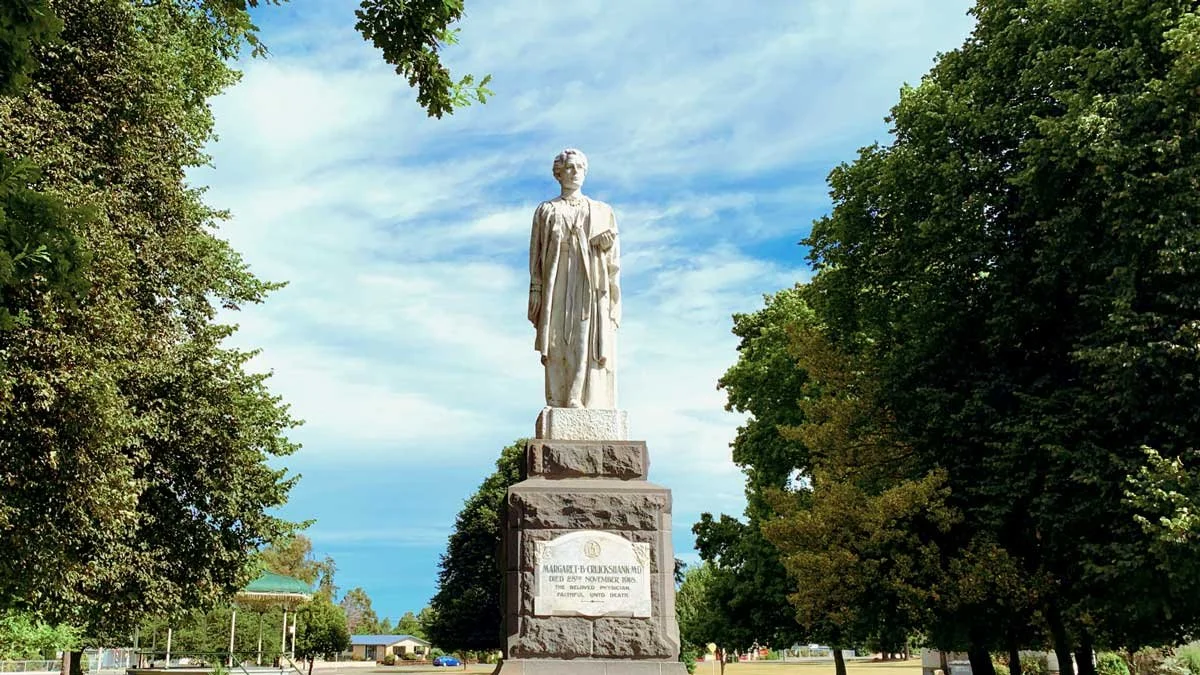
More than a century on, Dr Margaret Cruickshank is still part of everyday life in Waimate.
From her statue in Seddon Square visible to passing traffic on Queen Street, to her portrait on the silos watching over the town she looked after, her presence is a constant reminder of the mark she left here.
Early years
Dr Margaret Barnett Cruickshank was born in Palmerston on New Year’s Day in 1873, alongside her twin sister, Christina.
Sadly, their mother died when the girls were only 12. After that they attended school part-time while taking turns staying home to care for five younger siblings. Despite that, they both excelled academically, first at East Otago High School and later gaining scholarships to Otago Girls’ High School, where they graduated as duxes.
Dr Cruickshank graduated from the University of Otago School of Medicine in 1897. She was the second woman in the country to complete medical school, after her friend and classmate Dr Emily Siedeberg, and the first to become a registered doctor.
Christina gained both an MA and an MSc from the same university, another big achievement for a woman at that time, and went on to have a successful career in education.
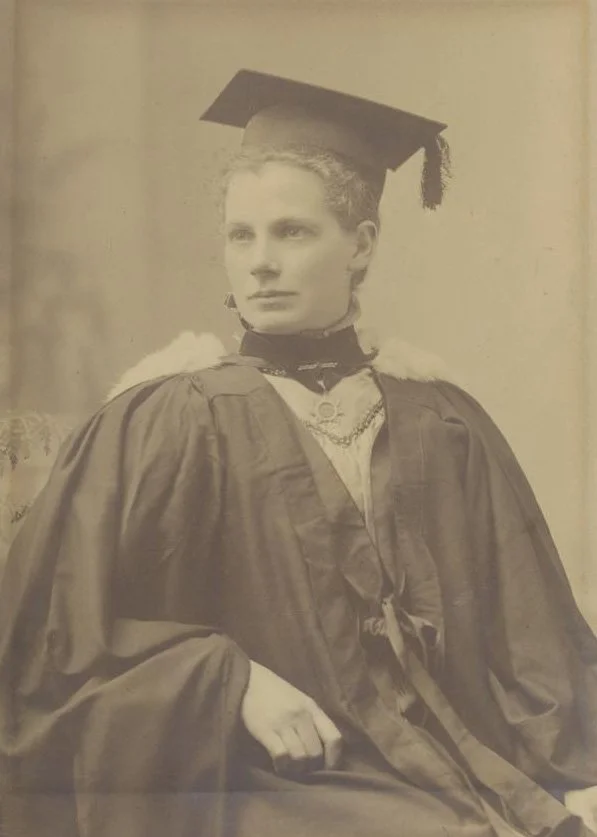
Pictured left: Dr Cruickshank in her graduation gown in 1897. From the Hocken Collection. Box-009-001.
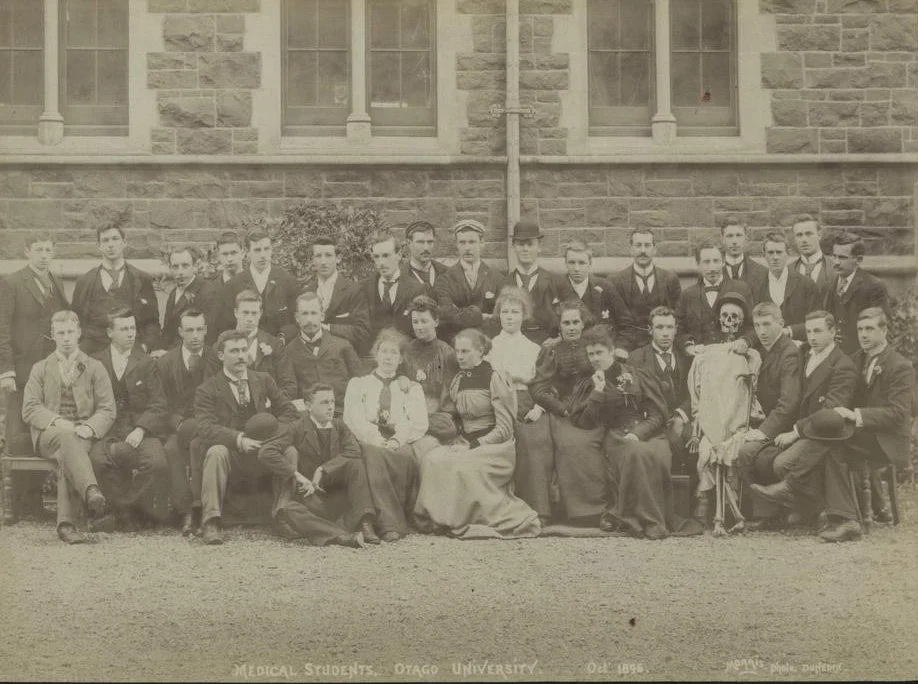
Pictured right: Medical students from Otago University in 1896. Dr Cruickshank is in the middle front row, to the right of the female student with a tie. From the Hocken Collection. Box-169-001.
A young doctor arrives in the district
On graduating, Dr Cruickshank went straight into general practice with Dr H C Barclay in Waimate. Apart from a short period in 1913 for further study in Britain, Waimate remained her home. When she left for Britain, the district gave her a public send-off, a gold watch and chain (inscribed “from her many Waimate friends”) and a purse filled with sovereigns.
She returned in 1914 and shared the superintendency of Waimate Hospital with Dr Barclay. She quickly became a central figure in the community - not just as the local doctor, but as someone described as ‘immensely popular’ in her obituary.
During the First World War, Dr Cruickshank organised the Waimate Red Cross Fund and took over the workload of Dr Barclay while he served overseas.
Marquette disaster hits home
In 1915, Waimate was rocked by the sinking of The Marquette, a transport ship torpedoed by a German submarine in the Aegean Sea.
A total of 167 lives were lost, including five nurses and a soldier with strong ties to the district. When the news reached home, a heavy “gloom” settled over the town and flags were flown at half-mast.
Dr Cruickshank was asked to write an appreciation for the Waimate Advertiser about the nurses. Reading her words now is particularly poignant. Just three years later, she too would lose her life while unselfishly serving the community.
“We are glad that New Zealand women serve so gladly, that they are proving themselves worthy to be on the Roll of Honour beside their brothers, and though we mourn the separation of their bodily presence from us, their spirits will never die, but will ever urge us to more unselfish service.”
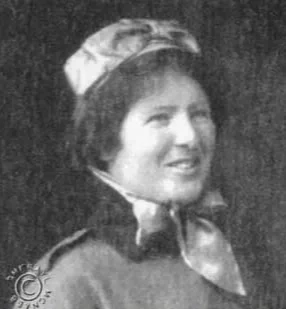

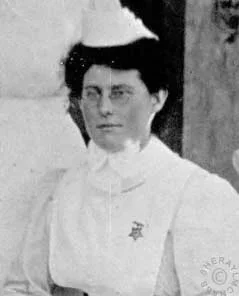
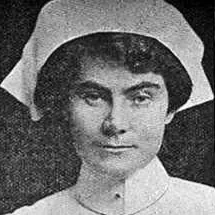
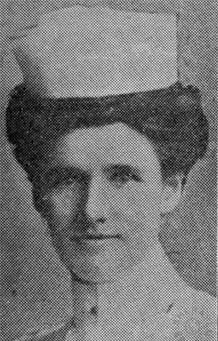

Pictured: The six lives lost in the sinking of The Marquette in 1915, who were either from, or had close ties, to Waimate District.
Top, left to right: Nurse Mary Gorman, Nurse Nona Hildyard, Nurse Marion Brown.
Bottom, left to right: Nurse Catherine Fox, Nurse Isabel Clark, Private James Samuel Bird.
The terrible toll of the Spanish flu
By the time the 1918 influenza epidemic reached Waimate, Dr Cruickshank was already carrying an enormous caseload.
Despite the risks, she continued visiting patients in their homes. She worked long hours, cooked meals for families too ill to care for themselves, and even milked cows when entire households were laid low.
Tragically, she contracted the flu and died from pneumonia, aged just 45.
Groundbreaking statue honours the beloved physician
In 1923, the community unveiled a statue in her honour at Seddon Square. At the time, it was the only statue in New Zealand dedicated to a woman, aside from memorials to Queen Victoria, and the only statue in the world dedicated to a female medical practitioner. The inscription reads: “The Beloved Physician – Faithful Unto Death.”
When the idea for a memorial was first floated in the Waimate Advertiser in 1918, it noted the Mayor would call a public meeting at a time “when people feel they can meet together without fear of infection from influenza” - an interesting parallel to more recent pandemic experiences.
The 20-foot statue was made in New Zealand from the largest imported block of Italian marble at the time. Dr Cruickshank is depicted wearing her university gown, and it was noted then that it achieved was a “splendid likeness”. The base is made from Timaru bluestone.
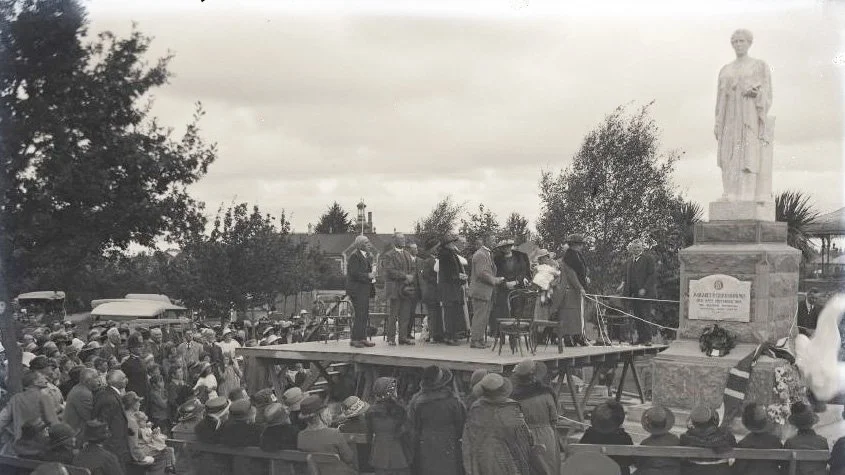
Pictured: The statue was unveiled by her friend of 23 years, Mrs Barclay. The memorial service included a tribute from Dr Emily Siedeberg.
Today, Dr Margaret Cruickshank still watches over Waimate - from Seddon Square, and from the painted silos that rise above the town she called home.